Your cart
(0)
Made to order · dispatched by 18 November

By commission
TeeshaaAll Lighting
natural colour, warm light, dirt, damp and heat: what really makes alabaster look yellow, and what to do about it.
Alabaster can look yellow, but the sources we checked do not describe it yellowing with age. More often the yellow is the stone's own cream or honey tone, the warmth of the light passing through it, or a surface change from grime, moisture, heat or harsh cleaning. Teeshaa alabaster lighting varies by block, so work out which cause applies first.
Four causes are in play. Two are normal: the stone's own tone and the colour of the light. Two are real changes: a soiled surface, and damage from moisture, heat or the wrong cleaning.
On the evidence: Conservation Wiki, a Building Conservation article and two Wikipedia articles describe how alabaster behaves, and none says it yellows. That does not prove it never happens in a home, so this page marks what is our own reasoning. If you mean the paint colour called Alabaster, this page is about the stone.
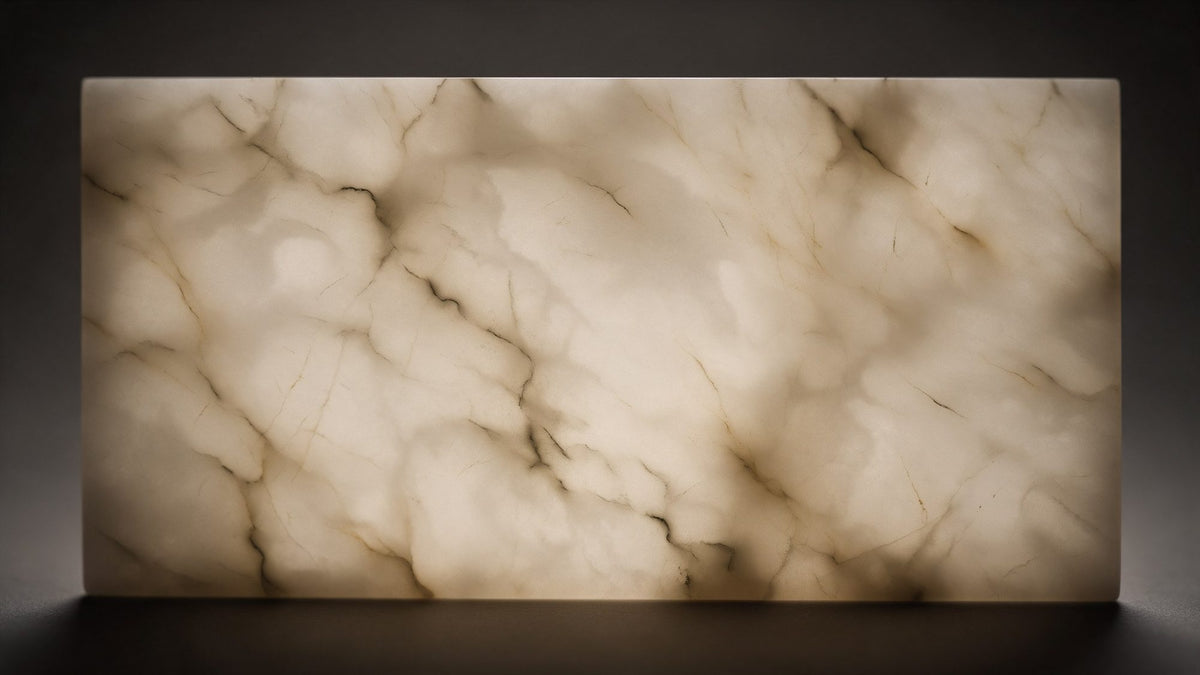
Often, yes. Pure alabaster is white, but it is rarely pure. Building Conservation describes colours from a very rare creamy white to a dark honey, and Wikipedia notes that iron oxide produces brown clouding and veining.
Teeshaa's stone is Spanish alabaster, and clouding, veining and mineral inclusions differ from block to block. Some blocks read soft and cloudy, some carry grey veins, and some hold warm amber inclusions. The stone is reviewed unlit and lit. A tone that follows the veins, is patchy rather than a film, and was there from day one is the stone itself. See the material page and what alabaster looks like.
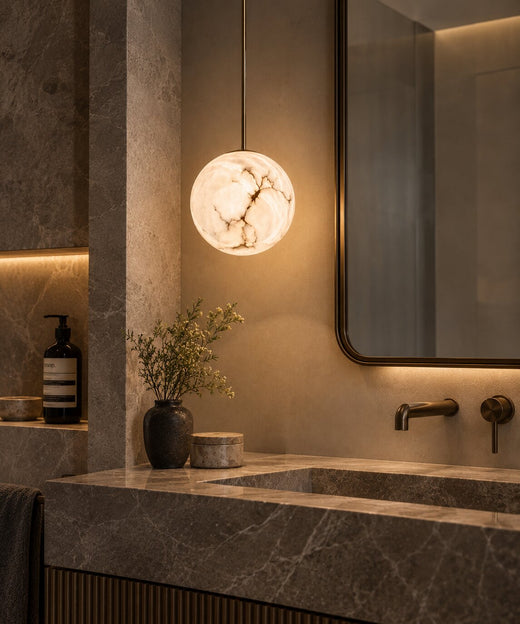
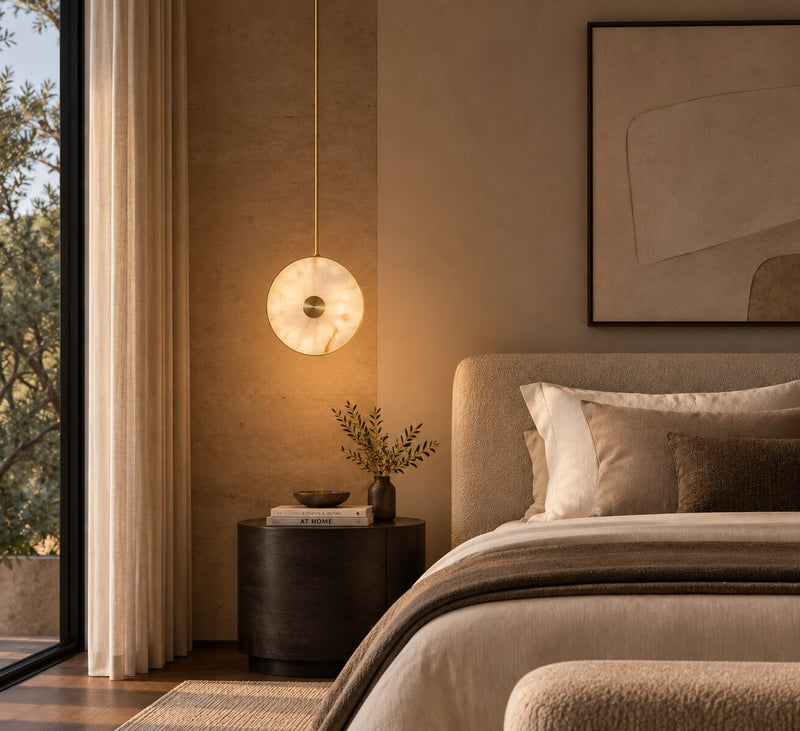
Yes. Alabaster is translucent, so it shows the colour of the light inside or behind it. The same stone can look pale in daylight and honey-coloured when lit.
Colour temperature is measured in kelvin: a lower number is warmer. Most Teeshaa pieces use integrated LED at 2700K, and several offer 2000K, 2300K or 3000K. A 2000K light pushes a cream block towards amber. Wall colour adds to the effect. To test, switch the light off and look at the stone in daylight. If it looks white or cream then, the warmth comes from the light. See colour temperature for alabaster lighting for the options.
It can change at the surface, though the sources describe dulling and staining, not yellowing.
One point is our own reasoning, not a finding from the sources. Alabaster is porous, so smoke, cooking residue and oils from handling could leave a yellow-grey film over time. Treat it as a suspicion, not an established fact.
The table matches common patterns to a likely cause and next step. It is a guide, not a diagnosis, so send photographs to the studio if you are unsure.
| What you see | Likely cause | What to do |
|---|---|---|
| Even cream, honey or amber tone that follows the veins, there from day one | Natural colour or mineral inclusions | Nothing to fix. Compare with the product page photographs. |
| Yellow only when lit, white or cream when switched off, or warmer after new paint | Warm light passing through translucent stone, plus wall colour and reflected light | Normal. Check the stone unlit in daylight, and ask the studio which colour temperatures suit your piece. |
| Dull yellow-grey film, strongest on upward-facing surfaces, in a kitchen or smoky room | Dust, smoke or cooking residue (our reasoning) | Dust with a soft, dry cloth; a lightly damp cloth for a mark. No detergents. |
| Rough, chalky or whiter surface with less glow after washing | Surface damage from water or dishwashing liquid | Stop cleaning. Write to the studio with photographs. |
| Opaque or chalky patch near a heat source or a hot lamp | Heat reducing translucency | Move the heat source or the piece. Write to the studio. |
| Dull or brownish patch after a splash or in a damp room, or beside a metal part | Moisture; Building Conservation notes rusting iron fixings stain alabaster | Dry the area, improve ventilation, write to the studio. |
Placement and gentle care remove the causes the sources describe, though nothing can promise that a natural stone will never change.
Write if the tone has visibly changed, a patch is chalky, rough or stained, or you are unsure. Send photographs with the light on and off, and say what you have cleaned it with.
Every Teeshaa light carries a one-year warranty against manufacturing defects. It does not cover physical damage, water or humidity damage, or damage from an installation done by anyone other than Teeshaa's team. Returns are accepted only if a piece arrives damaged or has a manufacturing defect, reported within 48 hours of delivery with clear photographs or videos; made-to-order pieces are not eligible. The refund policy has the full wording. Reach the studio through the contact page or at info@teeshaa.in.
Teeshaa's lights are made in Spanish alabaster, with stonework, metalwork, engineering and assembly in Teeshaa's own facilities in India. Because each block differs, no two pieces are the same, so photographs show the character of that stone, not a fixed shade.
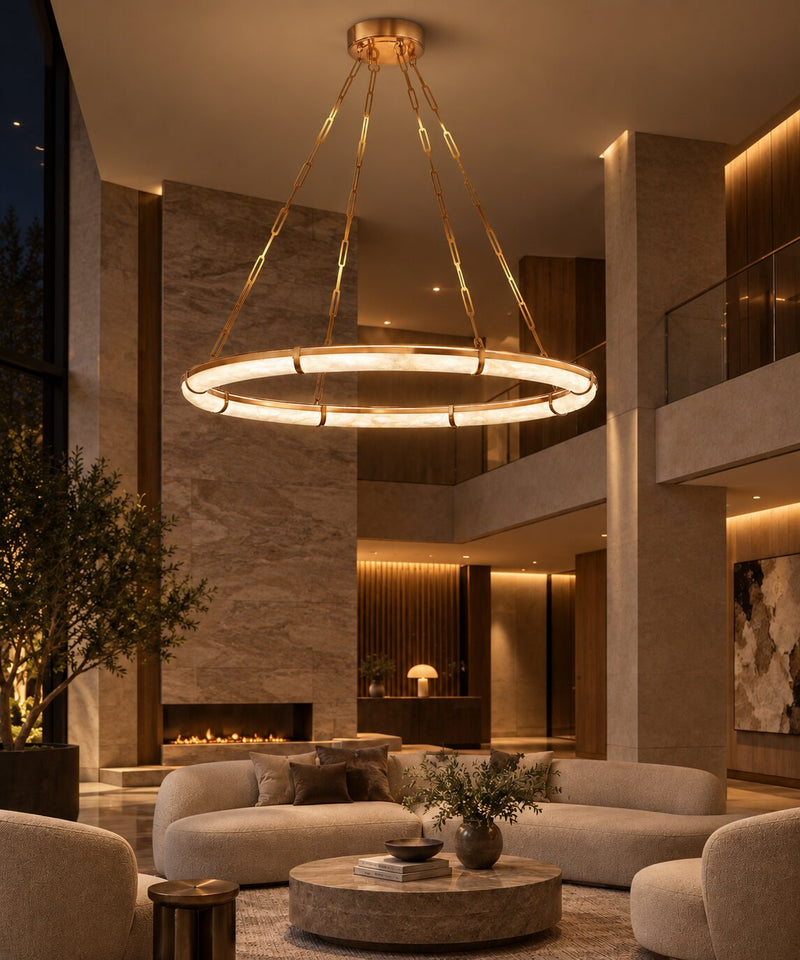
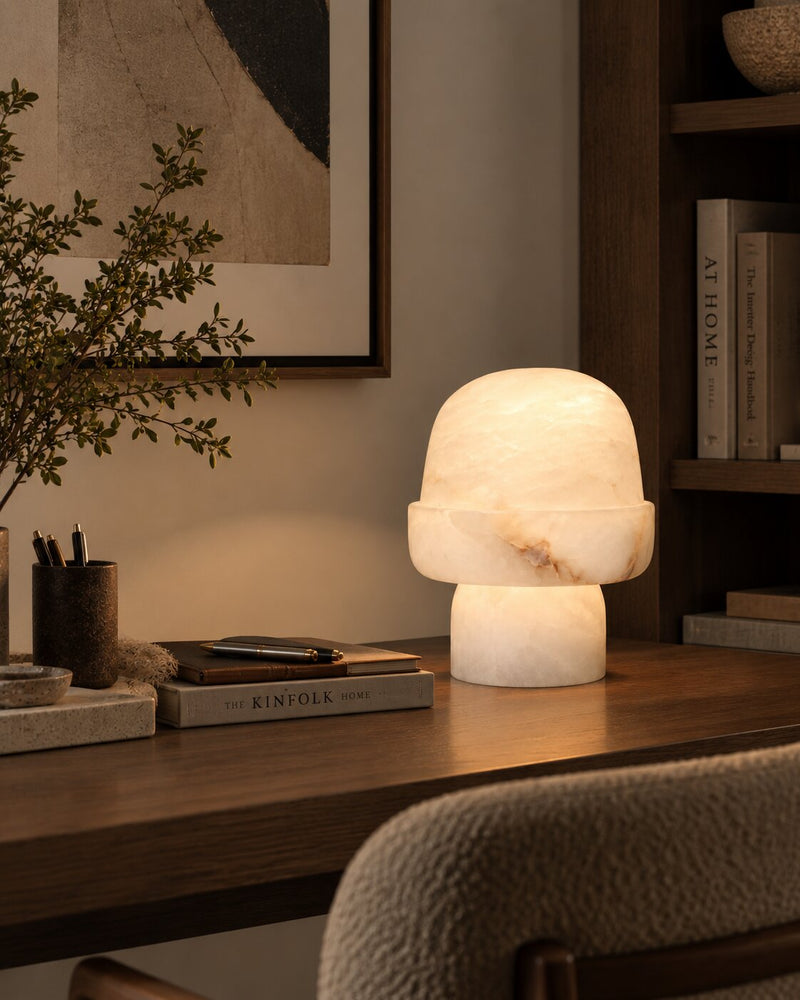
If warmth matters, check the colour temperature on the product page before you order. The Alabaster Linea Pendant, Totem Table Lamp and Halo Crown Chandelier are ready to order in some sizes. Browse the full alabaster lighting range, or read why alabaster glows.
The sources we checked do not describe alabaster yellowing with age. They do describe dulling, staining, loss of translucency from heat, and damage from water or dishwashing liquid. A yellow look is more often the stone's own cream or honey tone, or warm light passing through it.
Alabaster is translucent, so it shows the colour of the light passing through it. Most Teeshaa pieces use integrated LED at 2700K, and several offer 2000K, 2300K or 3000K. Lower numbers look warmer. Switch the lamp off and look at the stone in daylight to see its own tone.
Start gently: a soft, dry or lightly damp cloth, with no harsh chemicals or abrasive cleaners, and follow the care guide supplied with the piece. Dishwashing liquid is reported to leave polished alabaster rough, dull and whiter. If a mark stays, write to the studio with photographs.
Not by itself. Clouding, veining and mineral inclusions differ from block to block, and Teeshaa does not treat natural variation as a defect under its returns policy. A manufacturing defect or transit damage should be reported within 48 hours of delivery with clear photographs or videos.
Keep it in a dry, ventilated place, away from splash zones, open balconies, heaters and stoves. Dust it regularly with a soft cloth, handle it by the body or base, and avoid harsh chemicals. Nothing can promise that a natural stone will never change, but this removes the common causes.
Reviewed by the Teeshaa studio, 19 October 2026.
 What Is Alabaster, and Why Does It Glow?Alabaster is a translucent gypsum stone. Why it glows from within, why no two blocks match, how thickness changes the...Read the guide
 Can You Use Alabaster Lighting in a Bathroom?Alabaster belongs at the vanity and dressing area, not above the bath or in the shower. Zones explained, mirror heigh...Read the guide
 Alabaster vs Marble vs Onyx: Which Stone Is Best for Lighting?Which stone is best for lighting? Alabaster glows evenly, onyx shows bold bands, marble belongs in bases. Translucenc...Read the guide
Write to the studio with photographs of the stone, lit and unlit, so the studio can help you tell what is natural from what is not.