Your cart
(0)
Made to order · dispatched by 18 November

By commission
TeeshaaAll Lighting
2000K, 2300K, 2700K or 3000K: how colour temperature changes the glow of alabaster, room by room.
For alabaster lighting, 2700K is the dependable choice: it is the standard on most Teeshaa pieces and gives a warm, amber-tinted glow. Choose 2000K or 2300K for a deeper, candle-like mood and 3000K for a cleaner warm white. Stay at 3000K or below, because cooler light flattens the stone's warmth.
Colour temperature describes the tint of white light on a scale in kelvins. It is defined by the black-body radiator whose colour looks closest to the source, which is why a low number looks red-orange and a high number looks blue-white.
The common words "warm" and "cool" run opposite to the physics. In lighting, warm means a lower kelvin value. Some familiar reference points are below.
| Light source | Approximate colour temperature |
|---|---|
| Candle flame | 1,850K |
| Standard incandescent lamp | 2,400K |
| Soft-white incandescent lamp | 2,550K |
| Soft-white LED or compact fluorescent | 2,700K |
| Warm-white LED or compact fluorescent | 3,000K |
Alabaster is translucent and diffuses light, so the stone adds its own tint to what comes through. Cream and amber blocks push the glow warmer, and white or grey-veined blocks tend to look cleaner and slightly cooler.
That is why the same 2700K source can read a little differently from one block to the next, and why stone is reviewed unlit and lit. Look at photographs of the piece switched on, not only the number on the specification.
Use 2700K as the default. Move down to 2000K or 2300K for rooms you use to unwind, and up to 3000K where you want a crisper white, such as near a kitchen island or in a study.
Match the temperature to how the room is used and to the other lights in it. The table below is guidance, not a rule.
| Room | Suggested | Why |
|---|---|---|
| Living room | 2700K | Warm and sociable; blends with lamps and downlights at 2700K |
| Dining room | 2300K to 2700K | Flatters skin and food; dim for evening meals |
| Bedroom | 2000K to 2700K | Low, amber light helps the room feel calm at night |
| Kitchen island | 2700K to 3000K | A little crisper for prep; add downlights for task work |
| Foyer or staircase | 2700K | A warm welcome that reads well from outside and above |
| Study or reading nook | 3000K | Cleaner white for reading, with a task light for detail |
| Restaurant or hotel lounge | 2300K to 2700K | Warm, low glare; dim by time of day |
Yes. Keep the downlights, wall lights and lamps in a room within the same warm range. If a 4000K downlight sits next to a 2700K alabaster piece, the stone will look orange by comparison.
Alabaster is an ambient and accent source, not a task light, so pair it with discreet downlights where you read or cook, and choose those at 2700K or 3000K. Colour temperature is also separate from colour rendering, which describes how true colours look, so check both on the downlights you add.
On most LED fittings the colour temperature stays the same as the light is dimmed, so the glow gets lower but not warmer. Only specially designed warm-dim fittings shift towards amber as they dim.
Dimming is available on request on Teeshaa pieces. Confirm the dimmer type with the studio before any wiring is done, and read dimming and drivers for alabaster lighting. If you prefer a deeper tone at night, choose 2000K or 2300K, where the piece offers those options.
Most Teeshaa pieces use integrated LED at 2700K, and several offer 2000K, 2300K or 3000K. Check each product page for the options on that piece, or ask the studio before you order. Light sources vary by piece: the Totem Table Lamp uses an 8 W LED strip, and the Aura suspensions run from 12 W to 20 W.
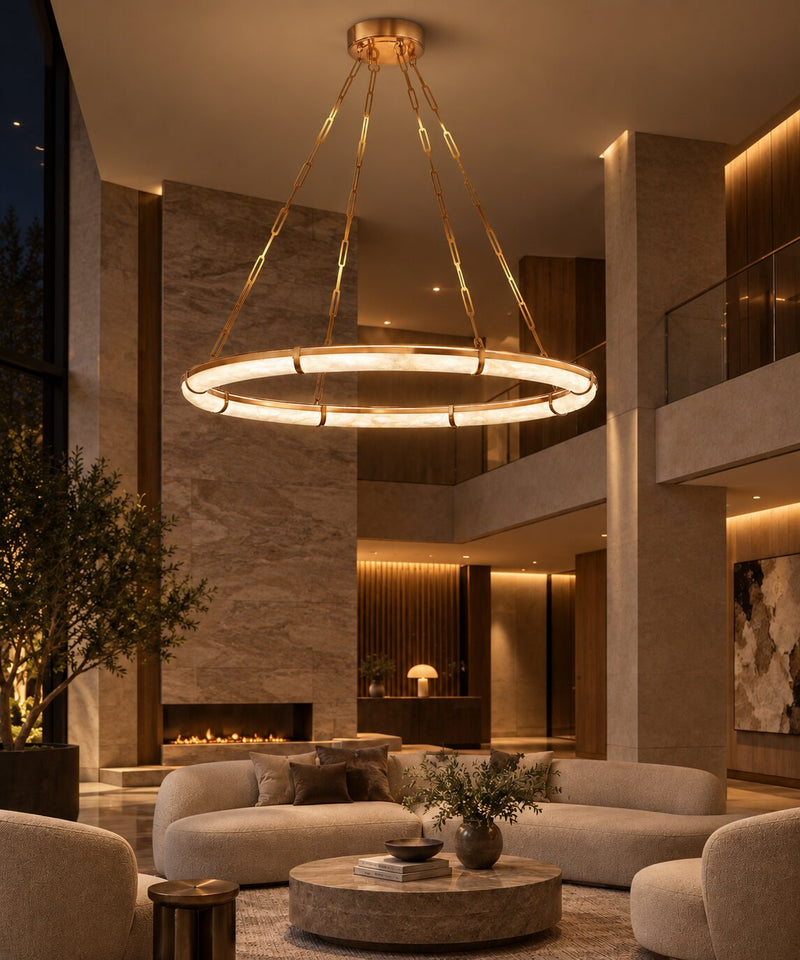
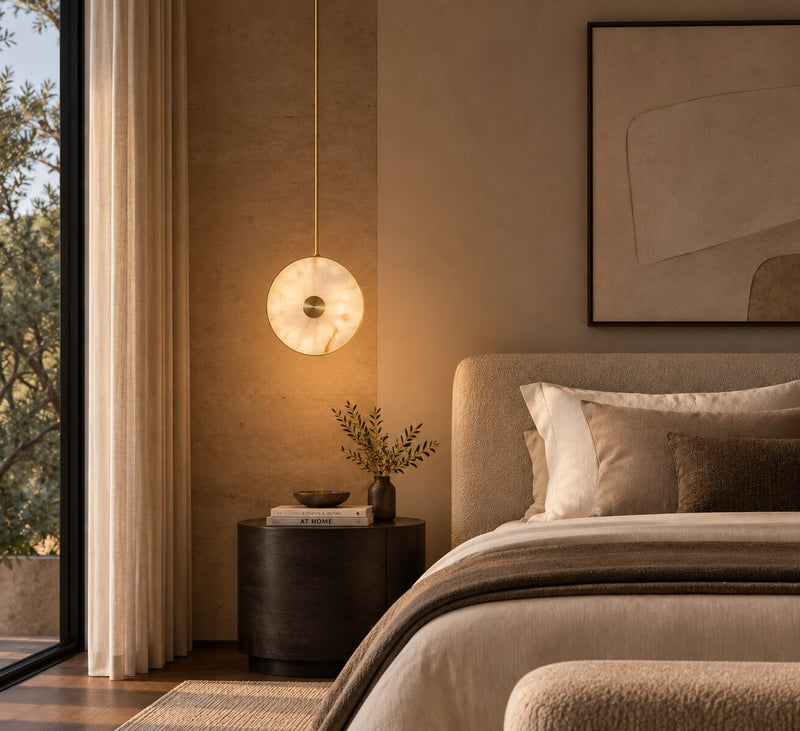
Try the Halo Crown Chandelier over a dining table, the Aura Wall Mount on a bedroom wall or the Alabaster Aura Suspension in a living space. Room guides are on bedroom lighting and dining room lighting, and the stone is described in why alabaster glows. The full range is under alabaster lighting.
For alabaster lighting, 2700K is the dependable default and the standard on most Teeshaa pieces. Choose 2000K or 2300K for a deeper, candle-like mood and 3000K for a cleaner warm white. Staying at 3000K or below keeps the stone looking warm.
Most Teeshaa pieces use integrated LED at 2700K, and several offer 2000K, 2300K or 3000K. Options differ by piece, so check the product page or ask the studio before ordering. Dimming is available on request.
No. 3000K is a warm white with a slightly cleaner tone, and it still suits alabaster. It works near a kitchen island or in a study. Go above 3000K and the stone loses its warmth and can look flat and pale.
Either suits a bedroom. 2000K is deep amber, close to candlelight, and can make whites look yellow. 2300K is warm and gentle with less colour shift. Choose 2700K if the room is also used in daytime or for dressing.
On most Teeshaa pieces the LED is integrated, so the colour temperature is chosen when you order; a few pieces take a standard bulb, so check the light source on the product page. Dimming, available on request, changes brightness but usually not the tint.
Reviewed by the Teeshaa studio, 19 October 2026.
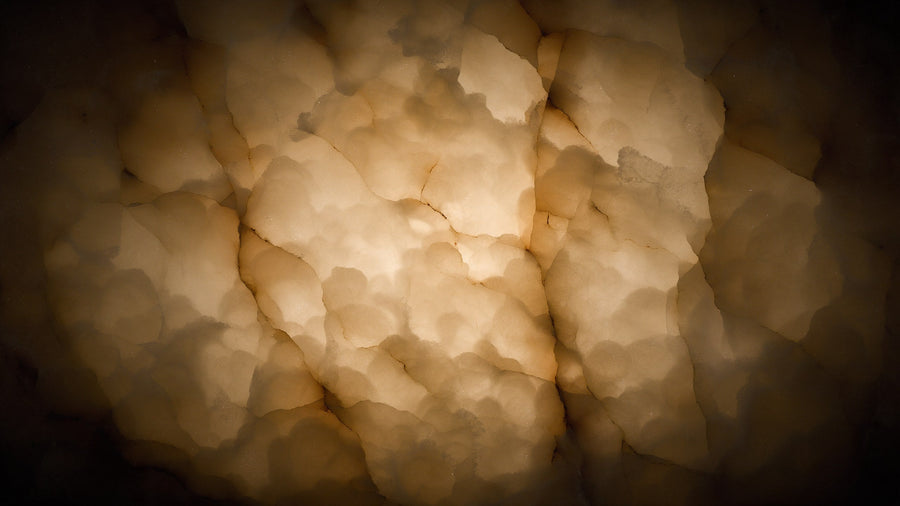 What Is Alabaster, and Why Does It Glow?Alabaster is a translucent gypsum stone. Why it glows from within, why no two blocks match, how thickness changes the...Read the guide
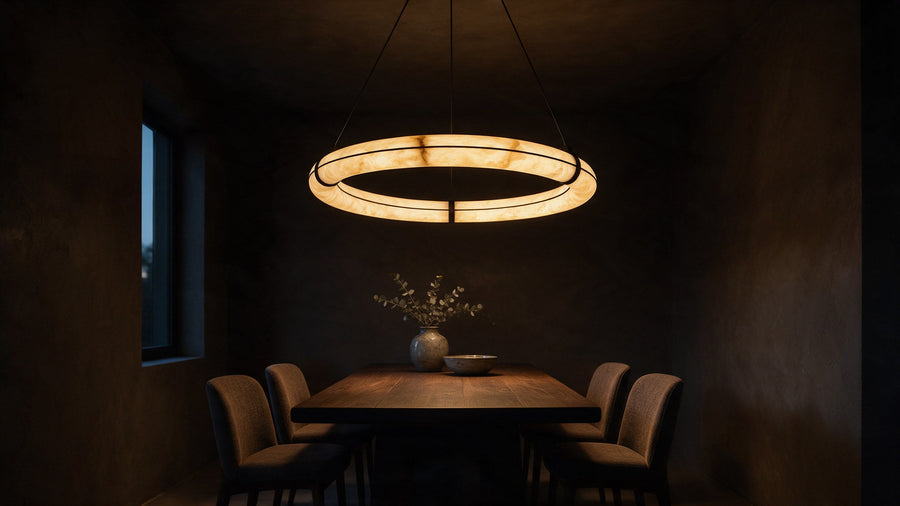 Restaurant Lighting Design: Warmth Without GlareOne diffused pendant per table at 75 to 90 cm, 2000 to 2700K, three dimming scenes and a table-by-table size guide. H...Read the guide
 Bedside Lighting: Wall Lights or Table Lamps?Wall lights, table lamps or a pendant at the bedside: how to choose, with mounting heights, colour temperature, switc...Read the guide
Tell the studio the room and the mood you want, and ask which colour temperature options a piece offers.