Your cart
(0)
Made to order · dispatched by 24 December

By commission
TeeshaaPendant
how clear, frosted, opal, smoked and ribbed glass change the light from a pendant, and which suits a table, a kitchen or a low ceiling. the pieces shown here are alabaster, not glass.
For glass pendant lights over a table, opal (milk) glass gives the softest, lowest-glare light, frosted glass is close behind, and clear glass suits pieces where the bulb itself is a feature. Smoked glass dims and tints the light; ribbed glass breaks it into lines. Teeshaa's own lights are Spanish alabaster, not glass.
There are five common kinds: clear, frosted or etched, opal or milk, smoked or tinted, and ribbed or textured. Each treats the lamp inside differently, which matters more than the shape of the shade.
Clear glass passes light straight through, so you see the bulb and get sparkle and sharp highlights. Frosted glass is made by sandblasting or acid etching, which pits the surface so light scatters while staying translucent. Opal glass carries tiny particles that scatter light in many directions, which is why it reads as a soft milky white.
Smoked or tinted glass absorbs part of the light and colours what remains, so the lamp looks darker and warmer or cooler depending on the tint. Ribbed or textured glass bends light along its ridges, giving lines of brightness rather than an even glow.
Opal glass gives the least glare, because it hides the light source behind an even white surface. Clear glass with a visible filament gives the most, and it usually fails the test below.
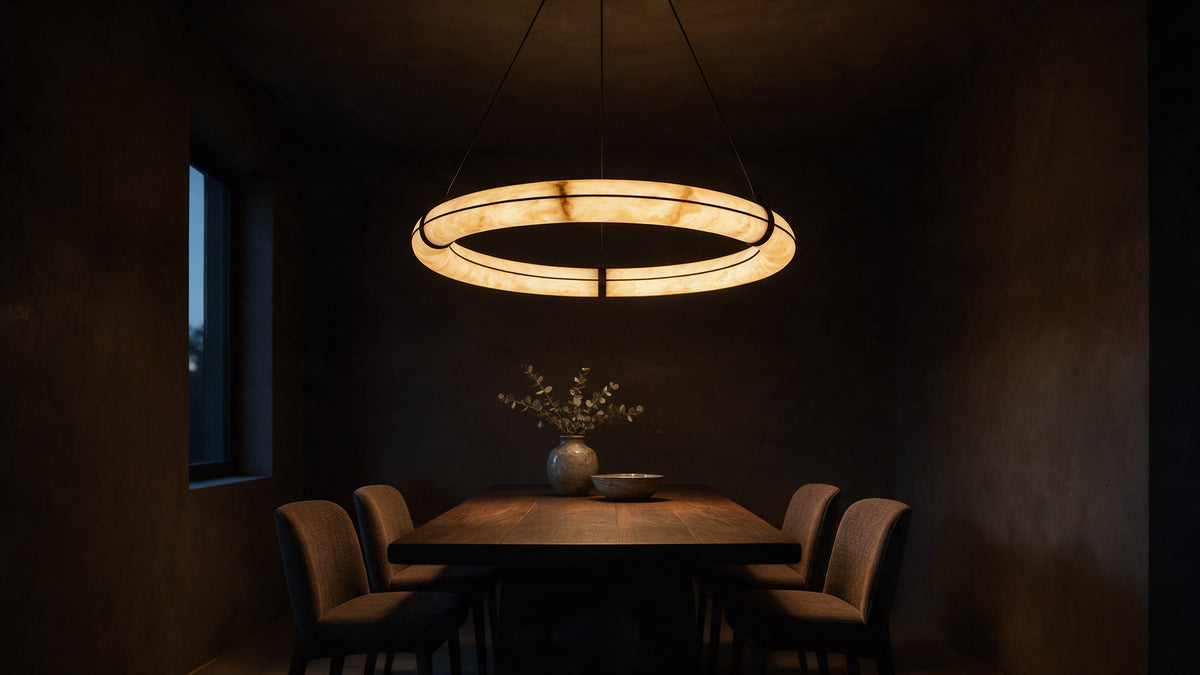
The test is simple. Sit at the table and look at the pendant with your head at normal height. If you can see a bright point of light, that point will be uncomfortable during a long meal. Hang a pendant over a table or island with its bottom edge 75 to 90 cm above the surface. That clears the seated eye line, but a bare bulb is still in view of someone looking across the table.
Frosted glass usually passes the test but can show a brighter patch where the bulb sits. For the wider question of table lighting, see dining table light: brightness, warmth and glare and the guide on how high to hang a pendant over a dining table.
Glass shows marks readily, and the effect depends on the type. Clear and smoked glass tend to show fingerprints and dust; frosted and ribbed glass can hide light marks but may trap grime in the texture.
In Indian flats, dust is a fact of life and kitchens add a thin film of cooking oil to anything nearby. Over a dining table open to a kitchen, expect to wipe a clear glass shade often to keep it looking clean. Opal glass is smooth and wipes easily, but its even white surface shows dust and streaks from a cloth. Ribbed glass can be harder to wipe because residue collects in the ridges.
Glass is also brittle. It survives daily life well once hung, but it can chip or crack in transit or when a shade is knocked during cleaning. Switch the lamp off, let it cool, and support the shade with both hands while you clean it.
Position and suspension matter more than the glass. Any shade on a long drop can sway in moving air, and a rigid rod steadies it far more than the shade material does.
If the pendant hangs near a running fan, choose a stiff suspension and keep it clear of the blades, then have a licensed electrician check the position on site. Wire and cable drops move more than rods. Our note on pendant suspension: rod, cable or chain explains the difference. For the weight of a piece, ask its seller, and take structural advice on fixing it to the slab.
Match the glass to what you want the light to do: opal or frosted for tables and seating, clear for display and small accents, smoked for mood, ribbed for texture.
| glass type | light it gives | glare (general guide) | cleaning | suited to |
|---|---|---|---|---|
| clear | point source, sparkle, visible bulb | high if the bulb is visible | shows fingerprints and dust | bars, entrances, displays, small accents |
| frosted or etched | soft but slightly brighter at the bulb | low to medium | hides some marks, can hold grime in the surface | dining tables, kitchens, corridors |
| opal or milk | even, diffused glow | low | smooth, wipes easily, shows streaks | dining tables, islands, bedside |
| smoked or tinted | dimmer, coloured, moody | depends on whether the bulb shows | shows fingerprints | accents, lounges, feature corners |
| ribbed or textured | lines and patterns of light | medium | harder to wipe, residue sits in the ridges | entrances, stairs, decorative clusters |
Clear glass shades usually leave the bulb and its holder in view, so the bulb becomes part of the design, while opal and frosted shades can take either a bulb or an integrated LED. Ask the seller which light source is used and whether it can be changed. Teeshaa does not supply bulbs.
Glass is the right choice for coloured accents, kitchens where a shade needs frequent wiping, which hard glass takes better than soft stone, and low net ceilings where a slim, light shade keeps the space open. Stone suits a room where you want a soft glow with no visible source and the natural veining as the feature.
A false-ceiling cove often takes 20 to 30 cm, so a 2.7 m slab height leaves about 2.4 to 2.5 m. Measure the finished ceiling, not the slab. Glass in a compact size works well there.
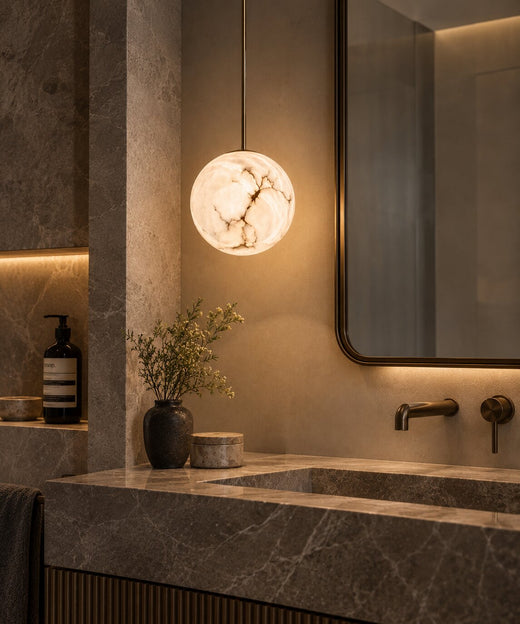
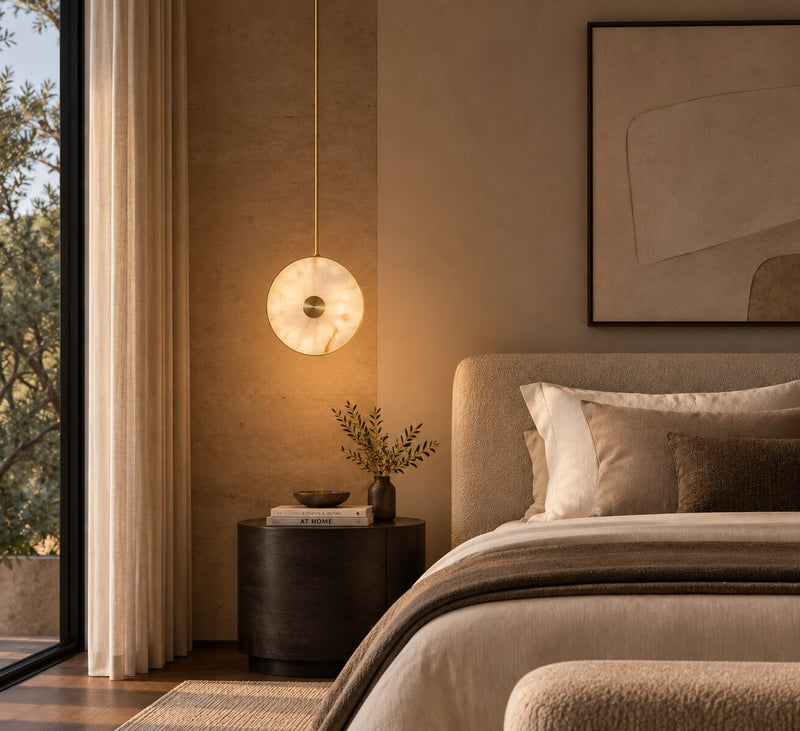
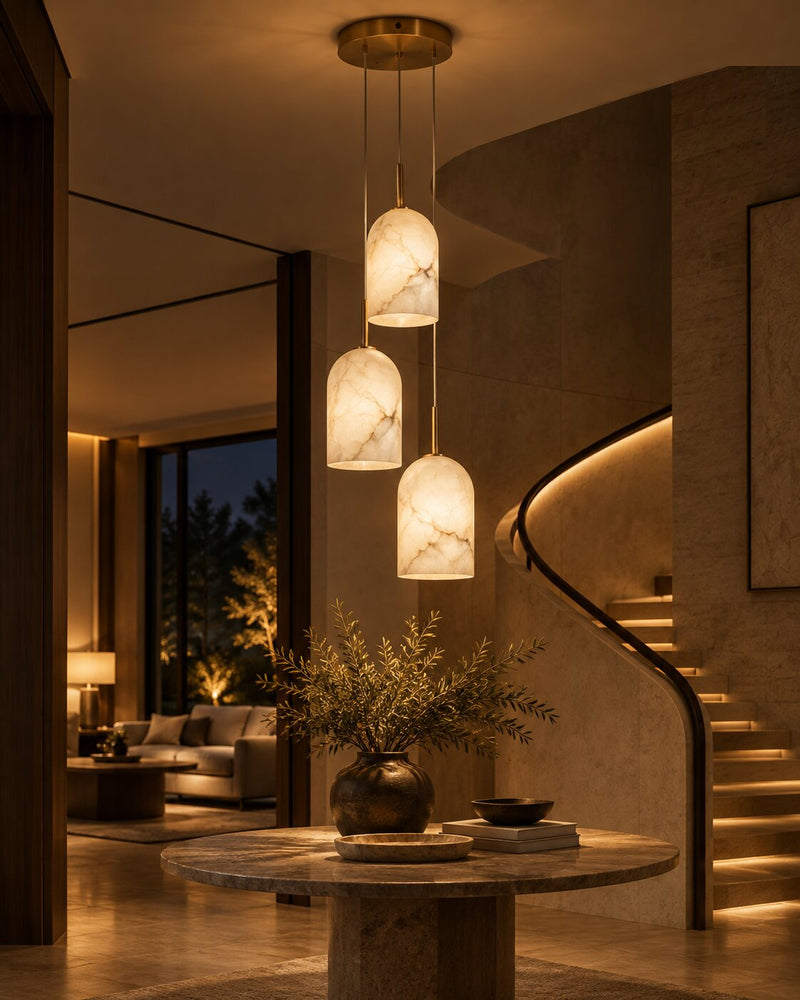
A translucent stone shade does what opal glass approximates: it scatters light inside the material, so the whole surface glows. For a full comparison, read alabaster vs glass lighting.
Teeshaa's lights are made in Spanish alabaster, a naturally translucent stone, and the collection has no glass pieces. If you want the diffused look of opal glass in stone, the Alabaster Linea Pendant and the Essenzo Pendant are both ready to order online. Browse them with the rest of the alabaster pendant lights and the wider alabaster lighting range.
If you need glass, Teeshaa Design Labs develops lighting in wood, metal, stone, crystal and glass to a brief, including one-off pieces. Share a drawing or a reference through the Design Labs page and the team confirms what is possible. Scope and cost are agreed before development begins.
Opal is usually the safer choice because it conceals the bulb well and gives an even glow, though a thin shade can still show a faint bright spot. Frosted glass is close, but can show a brighter patch where the bulb sits. Either is better than clear glass with a visible filament in view of people seated at the table.
Clear glass lets you see the bulb directly. Over a table, a pendant hangs with its bottom 75 to 90 cm above the surface, which clears the seated eye line but leaves the bulb in view of anyone looking across the table, so the bright point is uncomfortable to look at.
They need regular wiping. Dust and cooking film show quickly on clear and smoked glass, and ribbed glass holds residue in its ridges. Opal wipes easily but shows streaks, and frosted hides light marks but can hold grime in its surface. Switch the light off and let it cool before cleaning, and handle the shade gently.
Not in its own collection, which is Spanish alabaster, a stone that scatters light inside itself for a soft glow. Teeshaa Design Labs, its development and manufacturing division, develops lighting in wood, metal, stone, crystal and glass to a brief, including one-off pieces. Share a drawing or a reference through the Design Labs page and the team confirms what is possible.
It can, but position matters more than the glass. Choose a rigid rod suspension, keep the shade clear of the blades and have a licensed electrician confirm the layout on site. Wire or cable drops move more than rods, so avoid long flexible drops near a fan.
Last updated 6 November 2026.
 How High to Hang a Pendant Light Over a Dining TableThe 75 to 90 cm rule, a drop table by ceiling height, what a false ceiling changes, one piece or a row by table shape...Read the guide
 Alabaster Pendant Lights: Single, Cluster or Linear?Which pendant format suits which spot, with drop heights by location, a spacing table for islands and tables, and the...Read the guide
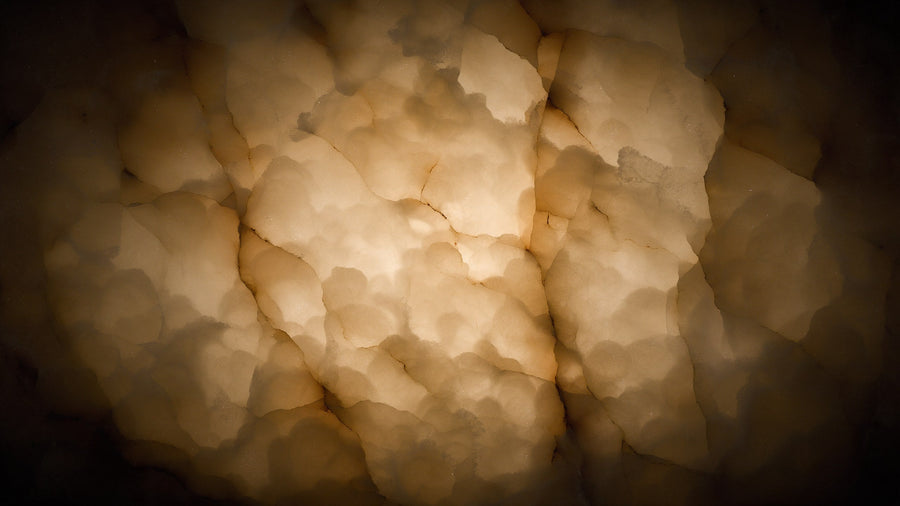 What Is Alabaster, and Why Does It Glow?Alabaster is a translucent gypsum stone. Why it glows from within, why no two blocks match, how thickness changes the...Read the guide
Tell the studio the room, the ceiling height and the drop you have in mind, and ask which pieces to look at.