Your cart
(0)
Made to order · dispatched by 18 November

By commission
TeeshaaAll Lighting
how alabaster and glass lighting differ in glow, fragility, humidity and care, so you can choose the right material for the room.
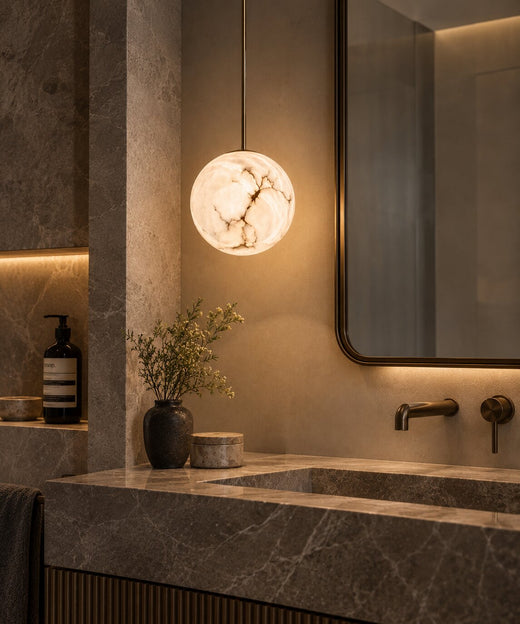
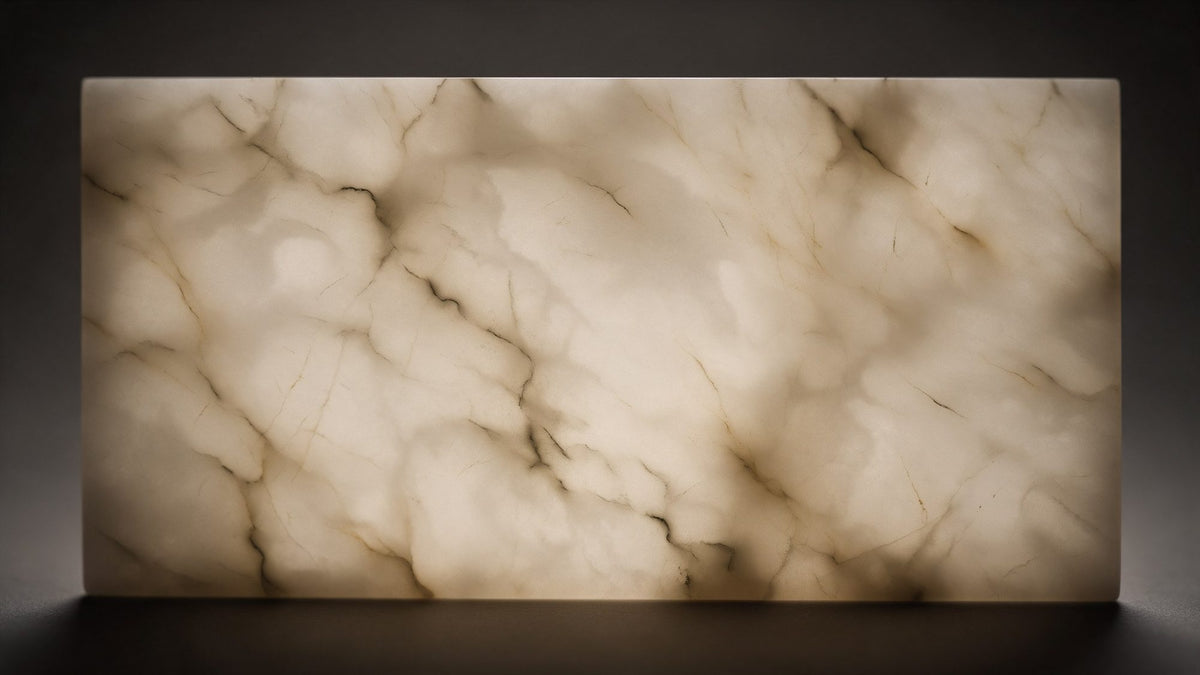
Alabaster lighting glows from within because light enters the stone and scatters, which gives a soft, even, diffused light and hides the light source. Clear glass lets light pass straight through, so it sparkles and shows the bulb. Alabaster is soft and varies from block to block; glass is hard, brittle and uniform.
Alabaster scatters light inside the stone, so the whole surface glows softly and the source disappears. Clear glass transmits light directly, so you see the lamp itself and the light can sparkle or throw sharp highlights.
Not all glass behaves this way. Frosted and opal glass also diffuse light, and they do it evenly and predictably. What glass does not easily copy is the depth of natural stone. In alabaster the glow has texture: pale clouded areas, darker veins and gentle shifts in tone are all visible when the piece is lit.
This changes how a room feels in the evening. A clear glass shade or a cut-glass chandelier gives you reflection and points of light. An alabaster piece gives you a quiet, even surface of light, which is usually easier on the eyes at night than an exposed bright point. Our guide on why alabaster glows explains the mechanism in more detail.
They fail in different ways. Glass is hard to scratch but brittle, and it can shatter on impact. Alabaster is soft, rated about 2 on the Mohs scale, so a fingernail can mark it, and it can chip or crack if knocked.
In daily use that means alabaster needs gentler handling and a position where it will not be brushed, bumped or leaned on. Glass tolerates the same wiping and brushing with fewer marks, but a single hard knock can destroy it. Neither material should be assumed to be the lighter one: weight depends mostly on wall thickness and size, not on the material alone. Ask the maker for the weight of a specific piece before it is hung, and take structural advice for anything heavy.
Glass is unaffected by humidity and wipes clean with common glass cleaner. Alabaster is slightly soluble in water, so keep it out of splash zones and away from open balconies, and clean it with a soft, dry or lightly damp cloth.
This matters in India, where monsoon humidity and sea air are part of the year. An alabaster light belongs in a dry, indoor, reasonably ventilated room. Avoid harsh chemicals and abrasive cleaners on the stone, and follow the care guide supplied with the piece. Our care page sets this out, and the guide on alabaster in a bathroom covers the limits for wet rooms. Water and humidity damage falls outside the one-year warranty, as the warranty and returns page explains, and the pros and cons of alabaster lighting weighs this limit against the benefits.
No. Glass is made to a specification, so a second shade can match the first. Alabaster is cut from natural blocks, so clouding, veining and mineral inclusions differ and no two pieces are the same.
At Teeshaa the stone is reviewed both unlit and lit, and the sections of multi-part pieces are matched for colour, clouding and light transmission. That keeps a large chandelier looking like one object. Natural variation between pieces is part of the material, and under the returns policy it is not treated as a defect. If you need identical units across a hotel or a large project, talk to the studio early about how the stone is selected. The material page shows the range of tone you can expect.
Glass makes more sense where moisture, steam or constant wiping is expected, or where you want a transparent, sparkling look. Typical examples are bath and shower areas, open or semi-open terraces, and kitchens with heavy cooking.
Alabaster is the stronger choice for dry living spaces where the light itself is part of the room: a living room, a dining table, a bedside, an entrance. It is also a better match when you want a diffused, glare-free source rather than a visible lamp. Choosing honestly between the two is better than placing stone somewhere it will struggle. For wet rooms, see our bathroom lighting page.
| Feature | Alabaster | Glass |
|---|---|---|
| Light quality | Diffused glow from within; source hidden | Clear: direct, sparkling, source visible. Frosted or opal: diffused |
| Hardness | Soft, about 2 on the Mohs scale; marks easily | Hard; resists scratching |
| Breakage | Can chip or crack when knocked | Brittle; can shatter |
| Water and humidity | Slightly soluble; keep out of splash zones | Unaffected |
| Cleaning | Soft dry or lightly damp cloth; no harsh chemicals or abrasives | Common glass cleaners suit most glass |
| Consistency | Natural stone; every piece is unique | Repeatable to a specification |
| Weight | Depends on wall thickness and size | Depends on wall thickness and size |
| Cost | Varies with size, form and finish | Varies with type, size and finish |
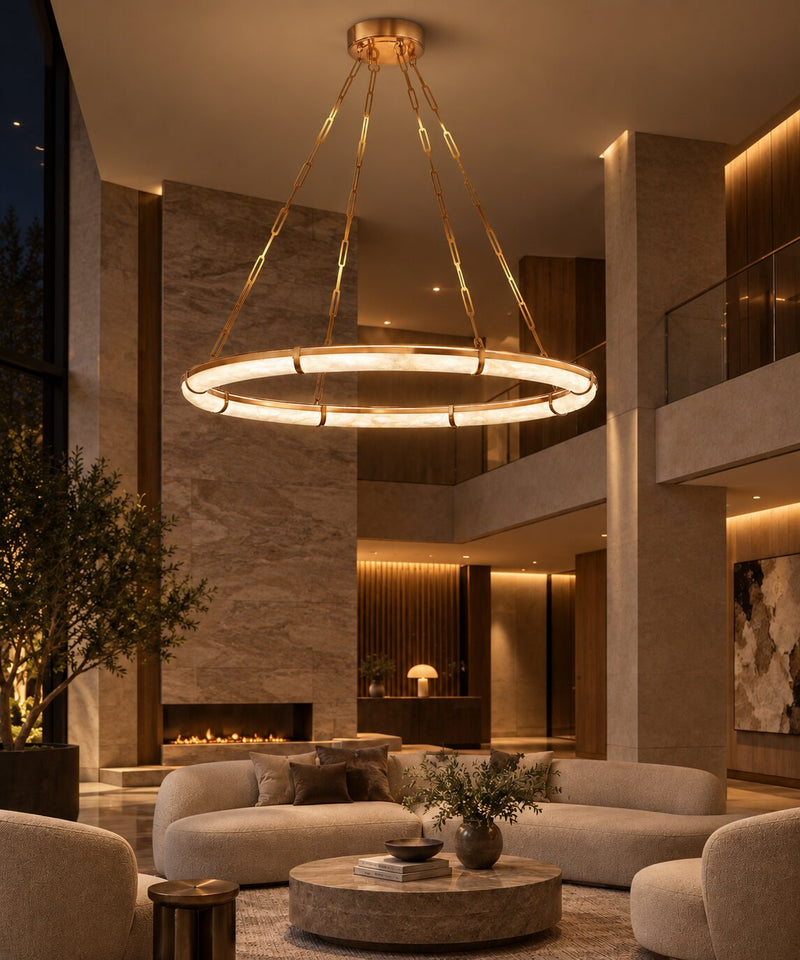
Teeshaa makes its lights in alabaster, so this comparison is written from the alabaster side. Stonework, metalwork, engineering and assembly happen in Teeshaa's own facilities in India, with design led from Bangalore. To see how the glow works over a dining table, look at the Halo Crown Chandelier; for a slim vertical column of light, the Alabaster Linea Pendant. Browse the pendant collection or return to the alabaster lighting hub. If you are weighing stone against other stone, read alabaster vs marble vs onyx.
Neither is better in every case. Alabaster gives a soft, diffused glow and the character of natural stone, but it is soft and dislikes moisture. Glass is harder, unaffected by humidity and can be clear or sparkling. Choose by room, the light you want and how much care you will give the piece.
Both diffuse light, but in different ways. Frosted or opal glass gives an even, repeatable surface. Alabaster is natural stone, so its glow carries clouding, veining and shifts in tone, and each piece looks slightly different from the next, even within the same design.
They fail differently. Glass resists scratching but is brittle and can shatter on impact. Alabaster is soft, about 2 on the Mohs scale, so it marks and scratches easily and can chip or crack if knocked. Both need careful handling during transport and installation.
Not near splash zones. Alabaster is slightly soluble in water, and Teeshaa advises keeping it away from bath and shower splash areas and open balconies. For those spots, glass is usually the safer material. A well-ventilated dry area away from direct water is a different matter, so ask the studio.
Glass usually tolerates common glass cleaners. Alabaster does not: Teeshaa's care guidance is a soft, dry or lightly damp cloth, with no harsh chemicals or abrasive cleaners, and the care guide supplied with the piece should be followed. Never soak the stone or scrub it.
Reviewed by the Teeshaa studio, 19 October 2026.
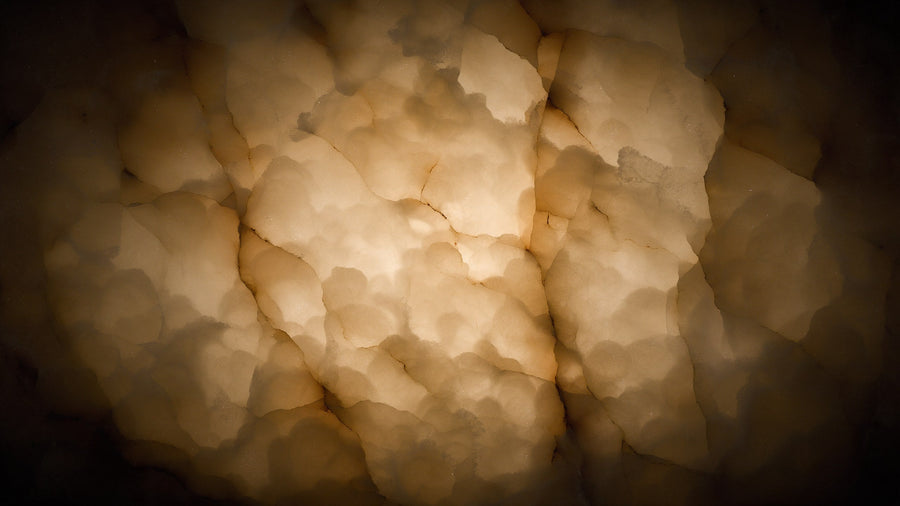 What Is Alabaster, and Why Does It Glow?Alabaster is a translucent gypsum stone. Why it glows from within, why no two blocks match, how thickness changes the...Read the guide
 Alabaster vs Marble vs Onyx: Which Stone Is Best for Lighting?Which stone is best for lighting? Alabaster glows evenly, onyx shows bold bands, marble belongs in bases. Translucenc...Read the guide
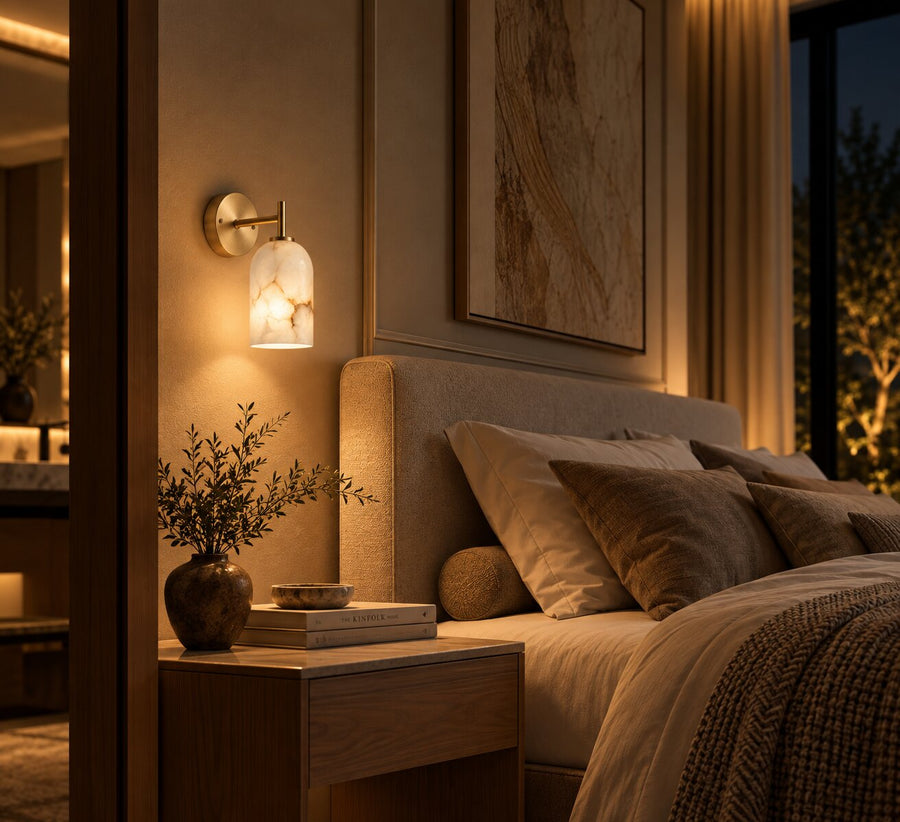 Can You Use Alabaster Lighting in a Bathroom?Alabaster belongs at the vanity and dressing area, not above the bath or in the shower. Zones explained, mirror heigh...Read the guide
Tell the studio the room, the ceiling height and the finish you have in mind, and we will suggest pieces to look at.