Your cart
(0)
Made to order · dispatched by 19 November

By commission
TeeshaaTable
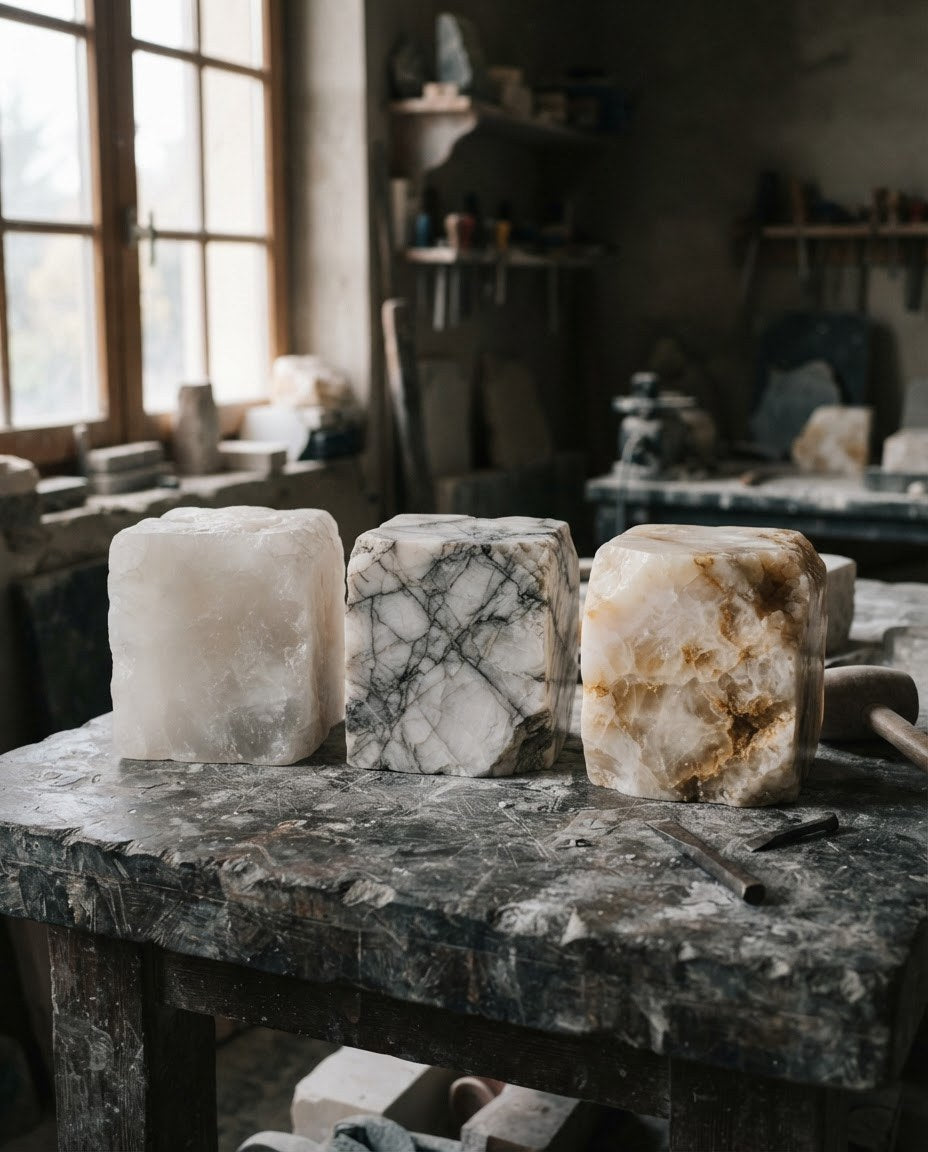
onyx and alabaster lamps compared: what the stones are, how hard they are, how they glow and which suits your room.
In the lamp trade, "onyx" usually means banded calcite, a calcium carbonate stone of about 3 on the Mohs scale. Alabaster for lighting is usually gypsum, softer at about 2. True mineral onyx is banded chalcedony, far harder. Teeshaa makes alabaster lighting and does not sell onyx, so this is a neutral comparison.
It depends on who is using the word. A mineralogist means black-and-white banded agate, a form of chalcedony. A lamp seller usually means a translucent banded stone that is softer and more widely available.
The mineral reference for onyx notes that the name has also been applied to banded calcite found in Mexico, India and other places, and to materials called "cave onyx" and "Mexican onyx". Alabaster references describe "onyx marble" as a name for calcite alabaster, usually a compact, banded travertine. The term is used loosely in the trade, so a listing that says onyx may not tell you the mineral.
If a listing means true onyx, the stone would be chalcedony. If it means onyx marble or Mexican onyx, it is calcite. Ask the seller to name the mineral, not only the trade name.
They differ in chemistry and hardness. Commercial onyx is calcite, a carbonate that reacts with acids. Gypsum alabaster is a sulfate, softer, and sensitive to water and heat. True onyx is silica and much harder than both.
| Property | True onyx (chalcedony) | Lamp-trade "onyx" (banded calcite) | Gypsum alabaster |
|---|---|---|---|
| Mineral | Silica, banded chalcedony | Calcium carbonate, CaCO3 | Calcium sulfate dihydrate |
| Mohs hardness | 6.5 to 7 | About 3 | About 1.5 to 2 |
| Fingernail and knife | Neither marks it | Resists a fingernail, yields to a knife | A fingernail scratches it |
| Acid | Silica, not a carbonate, so no fizzing like calcite | Dissolves and fizzes in acid | Does not fizz like calcite |
| Water | Silica, not a soluble salt like gypsum | Indoor use only | Slightly soluble, indoor use only |
| Typical look | Black and white bands | Bold bands in cream, honey and brown | Cloudy white or cream, grey veins, amber inclusions |
For the wider stone family see the guide to alabaster, marble and onyx lighting, and Spanish alabaster vs Egyptian alabaster for the gypsum and calcite split.
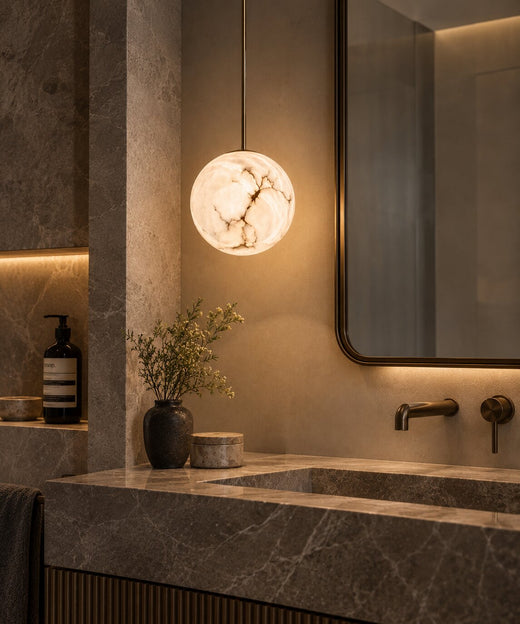
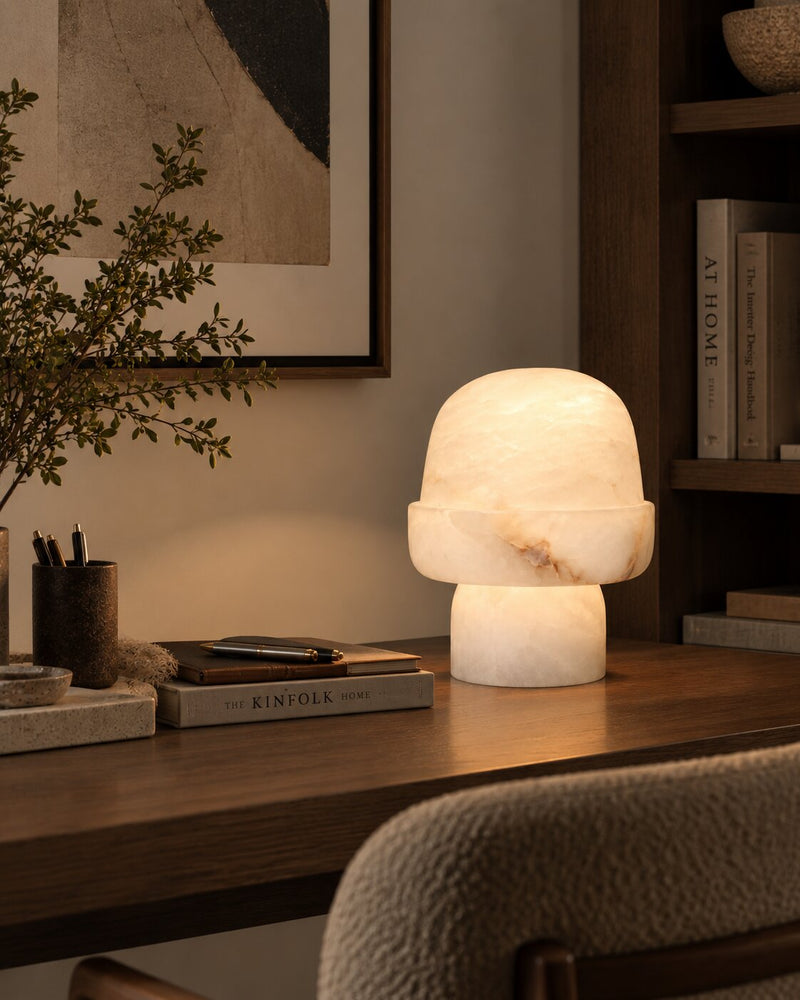
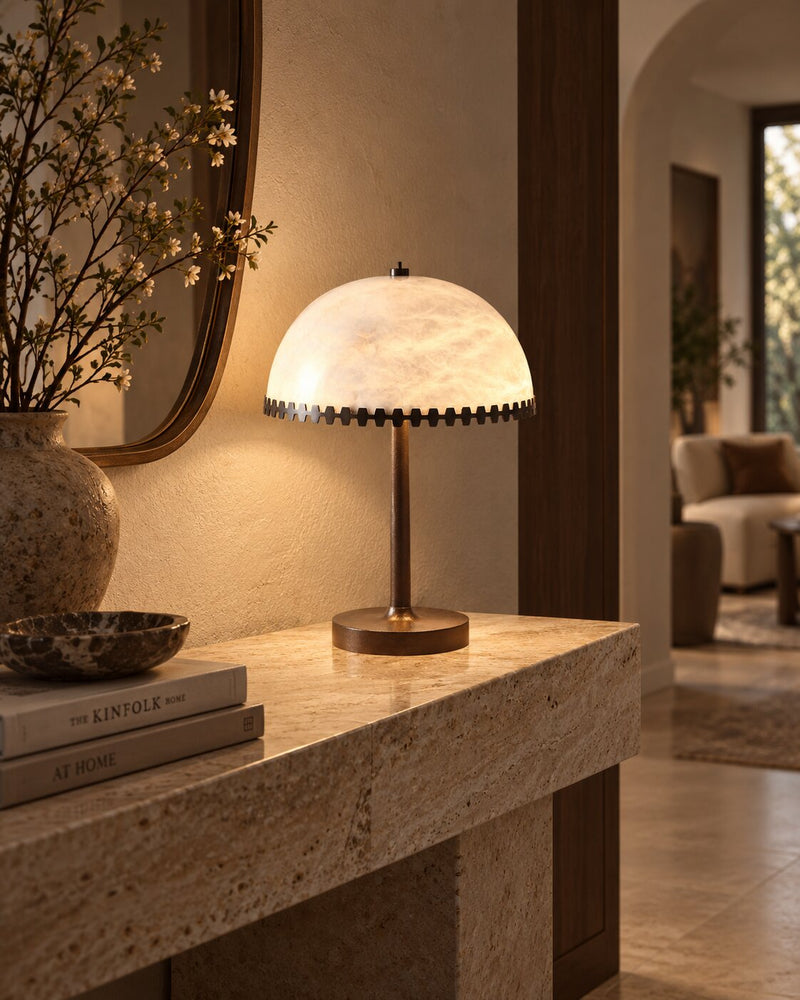
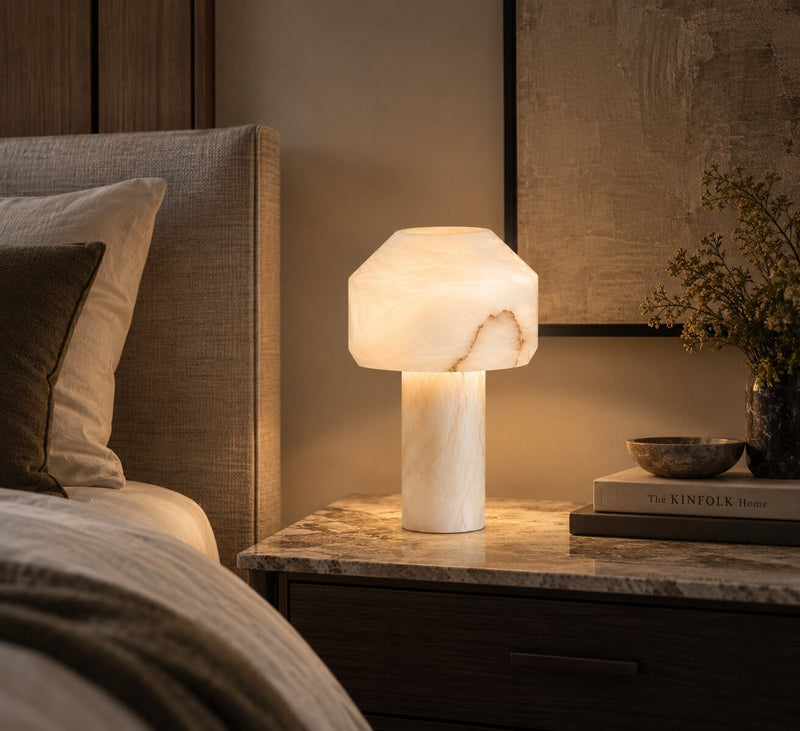
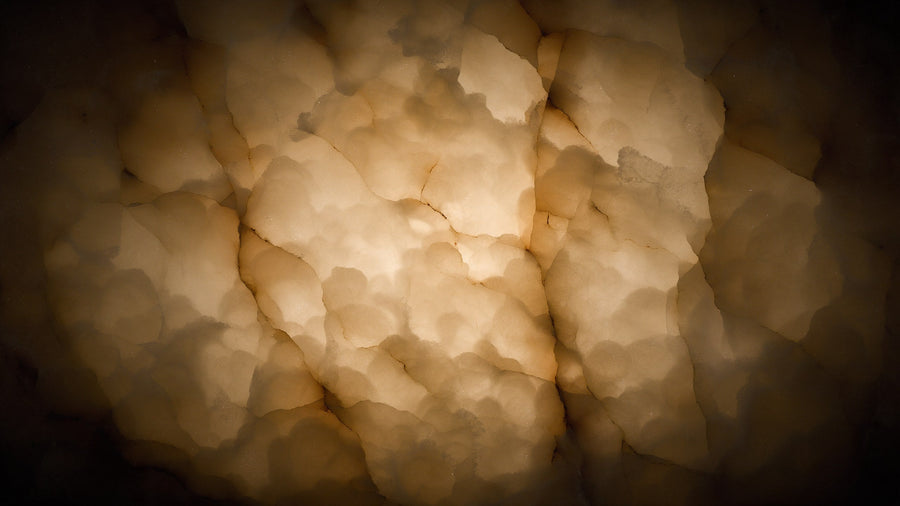
Banded calcite tends to show its stripes as lighter and darker bands when lit from behind. Fine-grained gypsum alabaster tends to scatter light into a cloudy, even glow. Both are translucent, and both change appearance between unlit and lit.
A hotspot is a brighter patch on the stone directly in front of the light source. Whether one appears depends mainly on wall thickness, the distance between source and stone, and any diffuser inside, more than on the mineral. Thin walls glow brighter and show more of the internal structure. Thick walls look denser and darker.
Ask for photographs of the actual lamp switched on, in a dim room, as well as unlit.
Banded calcite resists scratching better because it is harder. Gypsum alabaster marks more easily and dislikes moisture and heat. Neither is a rugged material, so both suit dry indoor rooms and gentle handling.
For Teeshaa pieces the care wording is: a soft, dry or lightly damp cloth, no harsh chemicals or abrasive cleaners, and the care guide supplied with the piece. For any other lamp, follow the seller's instructions. See the care page.
Choose banded calcite when you want a bold striped pattern or a surface that resists scratches. Choose gypsum alabaster when you want a soft, diffused glow with cloudy depth. Your room, light level and habits decide it.
| If you want | Better fit | Why |
|---|---|---|
| A bold, graphic banded pattern | Onyx (banded calcite) | The stripes are the character of the stone |
| A lamp that resists scratching in a busy room | Onyx (banded calcite) | Hardness about 3 against about 2, though both are soft stones |
| A soft, even, cloudy glow | Gypsum alabaster | Fine grain scatters light into a diffused wash |
| A quiet, sculptural look when switched off | Gypsum alabaster | Pale, cloudy stone reads soft rather than patterned |
| A bathroom vanity, open balcony or splash zone | Neither | Both are indoor stones that dislike water |
| A spot near a heater or stove | Neither is ideal | High heat reduces translucency in alabaster, so keep any stone lamp clear of it |
| Certainty about the stone | Whichever seller names the mineral | Trade names such as onyx marble are used loosely |
Either stone suits a dry bedside table, a living-room console or a hallway shelf. Pick by the light you want. Gypsum alabaster suits rooms where you want a calm, ambient glow. Banded calcite suits a statement piece where the pattern is the point.
Neither stone is a task light. Pair a table lamp with downlights or a reading light where you read or cook. In humid or coastal Indian homes, keep both away from bathrooms, splash zones and open balconies.
Teeshaa's lights are made in Spanish alabaster, a naturally translucent gypsum stone. Clouding, veining and mineral inclusions differ block to block, so no two pieces are the same, and stone is reviewed unlit and lit. The Pebble Lamp pairs Spanish alabaster with black Gorara stone.
For table lamps, see the alabaster table lamps, including the Totem Table Lamp at 49 cm tall, the Essenzo Porcini Table Lamp and the Pebble Lamp. The table lamp guide covers size and placement, and the material page explains the stone. Browse everything under alabaster lighting.
No. Lamps sold as onyx are usually banded calcite, a calcium carbonate stone of about 3 on the Mohs scale. Alabaster used for lighting, including Spanish alabaster, is usually gypsum at about 2. The trade also calls some calcite alabaster, so ask which mineral it is.
True onyx, which is banded chalcedony, is far harder than alabaster at 6.5 to 7 on the Mohs scale. The calcite sold as onyx in lamps is harder than gypsum alabaster, about 3 against about 2, but it is still a soft stone that a knife can scratch.
Neither glows better in general. Banded calcite shows contrasting stripes when lit, while fine-grained gypsum alabaster gives a cloudy, even glow. Wall thickness and the light source matter as much as the stone, so judge a lamp by photographs of that piece switched on.
It is better not to. Both are indoor stones, and alabaster references note that water solubility makes the stone unsuitable for outdoor work. Gypsum is especially sensitive to moisture. Keep either lamp away from splash zones, shower areas and open balconies, and in humid homes choose a dry, ventilated room.
Ask the seller to name the mineral, not only the trade name, since onyx, onyx marble and alabaster are used loosely. Gypsum can be scratched with a fingernail, while calcite resists it. Do not test a finished lamp by scratching. A clear written description of the stone is the safer route.
Reviewed by the Teeshaa studio, 19 October 2026.
 Alabaster vs Marble vs Onyx: Which Stone Is Best for Lighting?Which stone is best for lighting? Alabaster glows evenly, onyx shows bold bands, marble belongs in bases. Translucenc...Read the guide
 How to Choose an Alabaster Table LampLamp heights by surface with a size table, whether alabaster is bright enough to read by, what lit stone looks like a...Read the guide
 What Is Alabaster, and Why Does It Glow?Alabaster is a translucent gypsum stone. Why it glows from within, why no two blocks match, how thickness changes the...Read the guide
Send the studio your questions about alabaster table lamps, or arrange a visit to see the stone unlit and lit.