Your cart
(0)
Made to order · dispatched by 24 December

By commission
TeeshaaAll Lighting
stone, glass, metal, fabric, paper, wood, concrete and ceramic compared for glow, weight, humidity and dust in Indian homes.
The right lighting material depends on the glow you want and the room the light hangs in. Alabaster and opal glass diffuse light, clear glass sparkles, metal blocks it, and fabric, paper and wood suffer in monsoon humidity. Teeshaa makes alabaster lighting for dry indoor rooms; this page compares eight materials side by side.
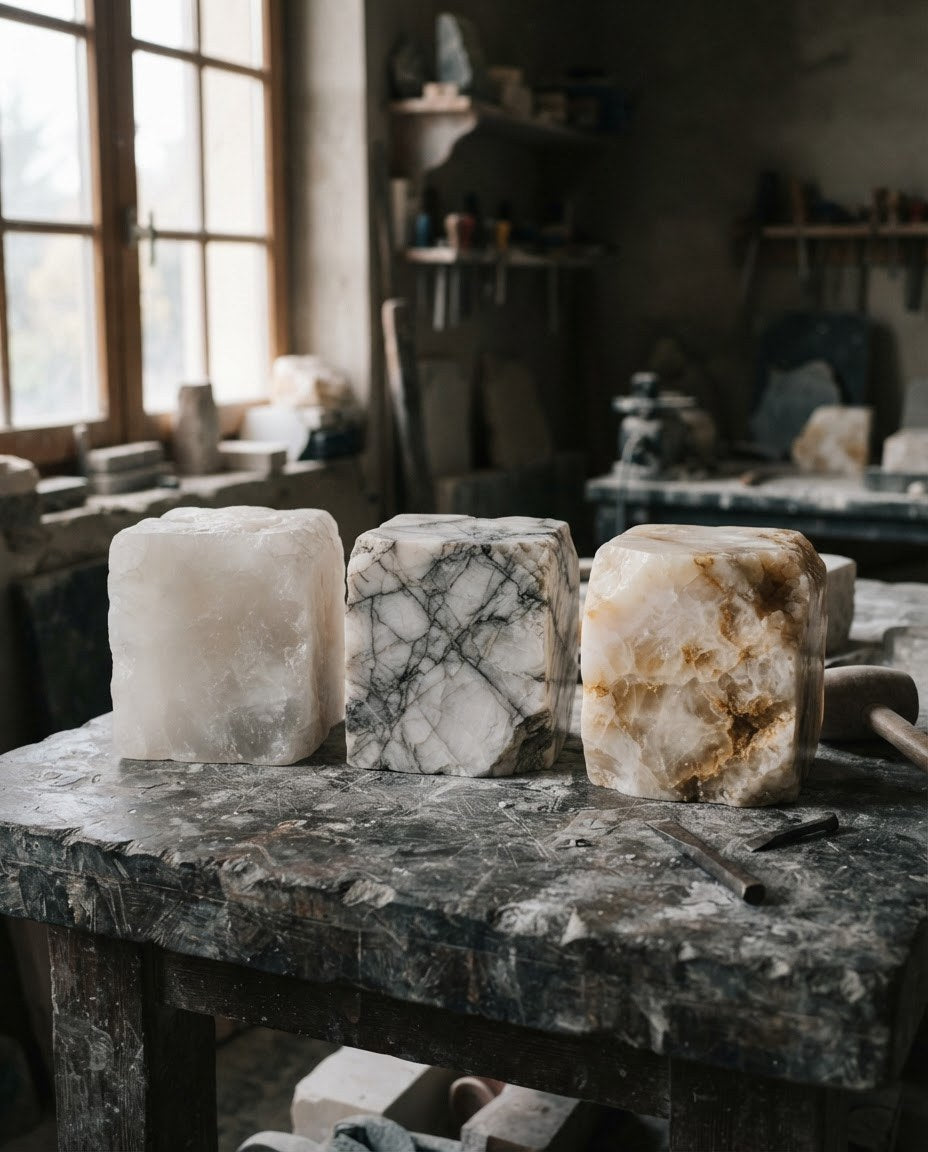
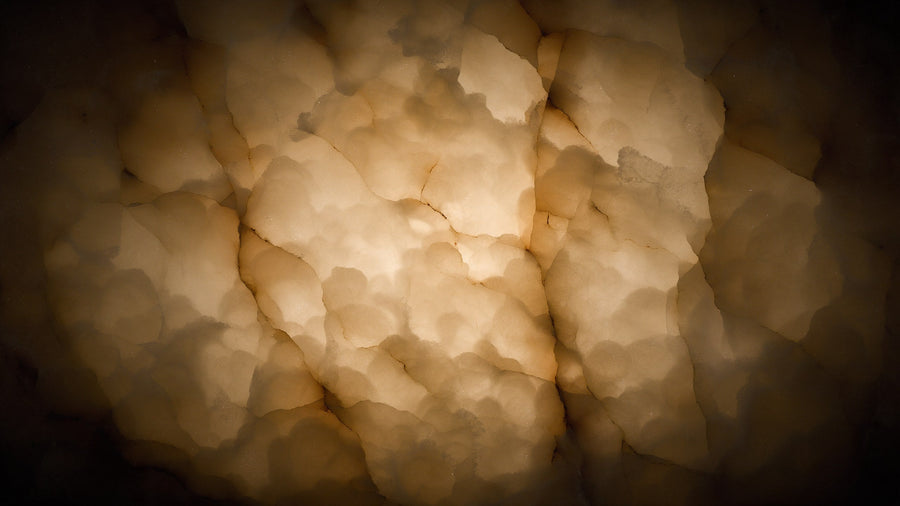
Alabaster and other stone. Alabaster is a naturally translucent stone, so the whole surface glows and the source is hidden. Clouding, veining and inclusions vary from block to block. It is soft and needs gentle handling in a dry room. Marble and onyx are harder; see alabaster, marble and onyx compared.
Glass. Glass can be clear, frosted or opal. Clear glass sparkles and shows the bulb; frosted and opal glass diffuse. It is unaffected by humidity and wipes clean, but it is brittle and can be heavy. See alabaster versus glass lighting for that pair.
Metal. Brass, steel and aluminium are opaque, so they shape light rather than glow. They carry weight well in frames and stems and tolerate dust. Finish decides the rest: raw brass develops a patina, while lacquered or plated surfaces can wear at edges.
Fabric and linen. Fabric shades give a warm, soft glow and are light. They gather dust in the weave, can hold moisture and stain, and may yellow with time. Washing is rarely an option, so most are dusted or lightly brushed. See fabric shades versus alabaster.
Paper. Paper lanterns diffuse light and weigh almost nothing, but they are fragile, mark easily and soften in damp air.
Wood. Wood is opaque, warm and carves well. It is hygroscopic, meaning it takes up and gives off moisture with the air, so unsealed wood can move, mark or stain in humid months.
Concrete. Concrete is opaque, heavy and cool in tone. Unsealed surfaces can be porous, hold dust and show marks, and the weight calls for structural advice on the fixing.
Ceramic and porcelain. Glazed ceramic wipes clean and ignores humidity. Porcelain is vitrified and impermeable, and thin porcelain is translucent. Both are brittle and often heavy for their size.
Alabaster, opal glass, thin porcelain, fabric and paper glow. Clear glass sparkles. Metal, wood and concrete block light and cast it up, down or around. A glowing material hides the source and lowers glare, while a sparkling one adds highlights and an opaque one makes shadow and pools of light.
If you want low-glare warmth over a dining table or bed, choose a glowing material. For crisp accents on a wall, an opaque shade can work well. Alabaster is not a task light, so pair it with discreet downlights where you read or cook.
Lighter materials put less load on a ceiling, but a false ceiling hangs below the structural slab, so plan the support back to the slab. For heavy stone, solid glass or concrete, take structural advice and use a licensed electrician.
Ask the maker for the weight of the specific piece. Also ask where the driver sits: Teeshaa product pages list it as remote or in the canopy. On a Teeshaa light, the warranty does not cover damage caused by an installation done by anyone other than Teeshaa's team; you may use your own electrician, but then the installation cannot be guaranteed.
Glass and glazed ceramic are unaffected by humidity. Sealed metal copes while its finish is intact; bare steel can rust and brass tarnishes. Fabric, paper and raw wood absorb moisture and can stain, sag, swell or grow mould in persistent damp. Alabaster is slightly water-soluble, so keep it in dry zones, away from bath and shower splash areas and open balconies.
Smooth glass, glazed ceramic and polished metal wipe free of dust, while open-weave fabric and textured stone or concrete hold it. For alabaster, Teeshaa advises a soft, dry or lightly damp cloth and no harsh chemicals or abrasive cleaners; follow the care guide supplied with the piece and the care page. Teeshaa's one-year warranty does not cover water or humidity damage.
Metals change surface over time, fabric and paper can yellow, and alabaster keeps its natural variation but, being soft, can scratch. Our page on whether alabaster turns yellow separates colour, light and real surface change. Metal can often be refinished and a shade replaced; cracked glass, ceramic or stone is harder to mend.
Heat matters most near the bulb: keep fabric and paper clear of any hot source and use only the wattage the fitting is rated for. LED runs cooler than a filament bulb but still warms its housing. Most Teeshaa pieces use integrated LED at 2700K, while some use E26 or E27 bulbs.
| Material | Glow | Weight | Humidity | Dust | Care | Suits |
|---|---|---|---|---|---|---|
| Alabaster | Diffused, source hidden | Depends on thickness and size | Slightly soluble; dry zones only | Smooth stone wipes lightly | Soft dry or lightly damp cloth | Living, dining, bedroom, entrance |
| Glass | Clear sparkles; frosted diffuses | Varies; thick glass is heavy | Unaffected | Wipes clean | Glass cleaner usually fine | Dining, kitchen, rated bathrooms |
| Metal | Opaque; shapes light | Moderate to heavy | Sealed finishes cope | Polished wipes clean | Depends on finish | Frames, wall lights, any room |
| Fabric, linen | Soft, warm glow | Light | Stains, may mould in damp | Holds dust in weave | Dust or brush gently | Dry bedrooms, lounges |
| Paper | Diffused | Very light | Softens in damp | Marks easily | Dust lightly | Dry, sheltered corners |
| Wood | Opaque | Light to moderate | Can move or stain unsealed | Grain holds dust | Per finish | Dry living areas |
| Concrete | Opaque | Heavy | Porous unless sealed | Texture holds dust | Per sealer | Entrances, studios |
| Ceramic, porcelain | Glazed opaque; thin porcelain translucent | Often heavy | Unaffected when glazed | Wipes clean | Soft damp cloth | Kitchen, dining, hall |
Settle the room's damp and dust first, then choose the glow.
| Room | Materials that suit | Materials to avoid |
|---|---|---|
| Living room | Alabaster, glass, metal, fabric | Paper near a coastal window |
| Dining room | Alabaster, opal glass, ceramic | Open-weave fabric over food |
| Bedroom | Alabaster, fabric, wood | Sparkling clear glass at eye level |
| Kitchen | Glass, glazed ceramic, sealed metal | Fabric, paper, raw wood, alabaster near the stove |
| Bathroom | Damp-rated glass, glazed ceramic, sealed metal | Fabric, paper, raw wood, alabaster |
| Covered balcony | Damp-rated sealed metal, glazed ceramic | Alabaster, fabric, paper |
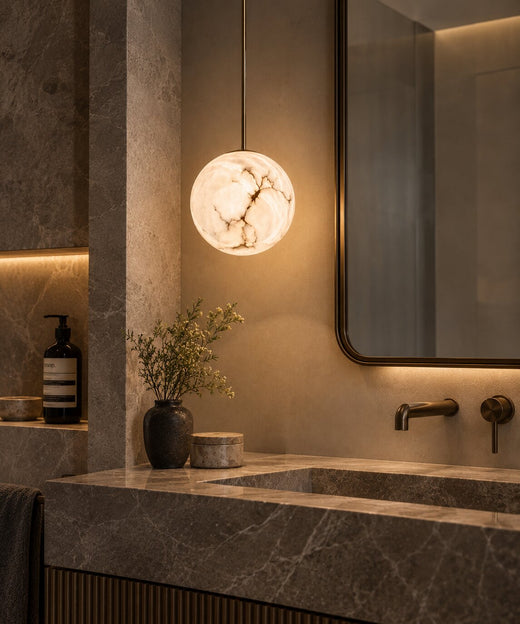
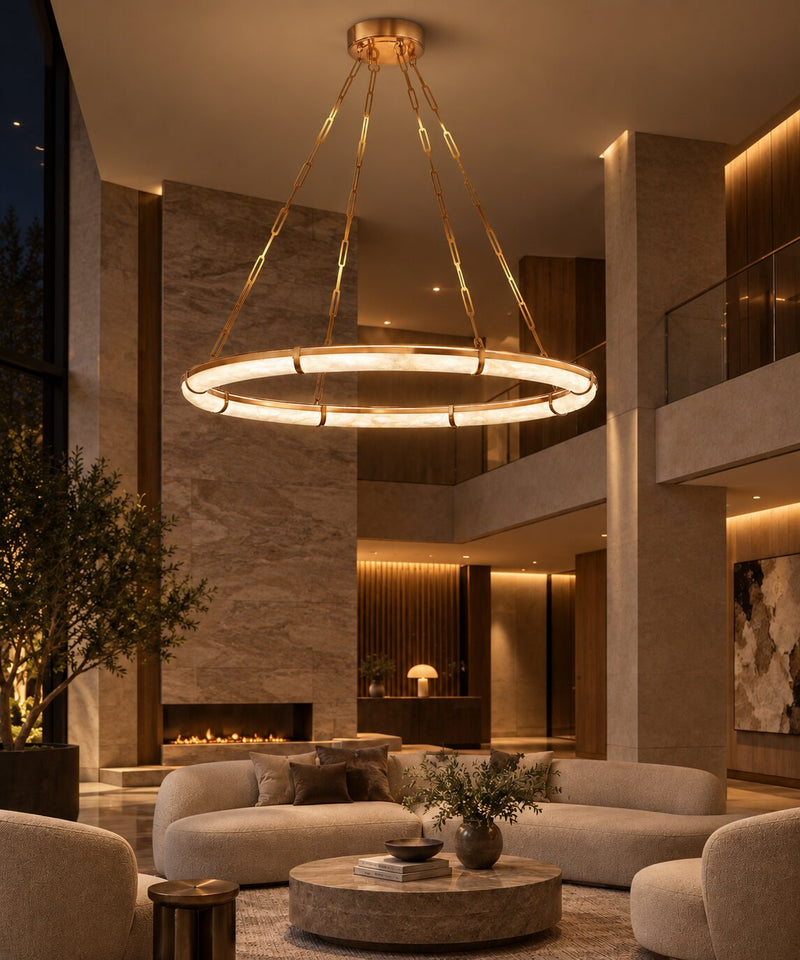
Teeshaa's own collection is Spanish alabaster, designed from Bangalore and made in its own facilities in India. For stone that glows, see the Halo Crown Chandelier, the Alabaster Linea Pendant and the Totem Table Lamp, or read the material page and stone lighting. The alabaster lighting hub covers the range, and alabaster in a bathroom covers wet rooms.
Teeshaa Design Labs develops lighting in wood, metal, stone, crystal and glass to a brief, including one-off pieces. Share a drawing or a reference through the Design Labs page and the team confirms what is possible.
It depends on what you mean by glow. Alabaster and opal glass spread light across the whole surface, so the source disappears. Clear glass sparkles and shows the bulb. Thin fabric or paper also glow but dim and discolour with age. Metal does not glow at all; it shapes light instead.
Fabric, paper and thin wood are usually the lightest, while concrete, solid stone and thick glass or ceramic are heavy for their size. Weight really depends on wall thickness and form, so ask the maker for the weight of the exact piece before a jhumar or pendant is hung.
No material is child-proof. Fabric, wood and metal do not shatter, but fabric collects dust and marks. Glass, ceramic and soft stone can break or chip, so hang them well out of reach or choose a wall position above head height. Keep cables and low table lamps out of reach.
Glass, glazed ceramic and sealed metal cope well with damp, provided the fitting is made and rated for damp rooms and a licensed electrician confirms where it can go. Fabric, paper and raw wood should stay out of splash zones, and Teeshaa advises keeping alabaster away from bath and shower splash areas.
Yes, and it often works well: metal frames hold stone or glass, and a metal canopy can hide the driver. Mixing does mean each material keeps its own care needs. For any Teeshaa piece, follow the care guide supplied with it.
Last updated 6 November 2026.
 What Is Alabaster, and Why Does It Glow?Alabaster is a translucent gypsum stone. Why it glows from within, why no two blocks match, how thickness changes the...Read the guide
 Alabaster vs Marble vs Onyx: Which Stone Is Best for Lighting?Which stone is best for lighting? Alabaster glows evenly, onyx shows bold bands, marble belongs in bases. Translucenc...Read the guide
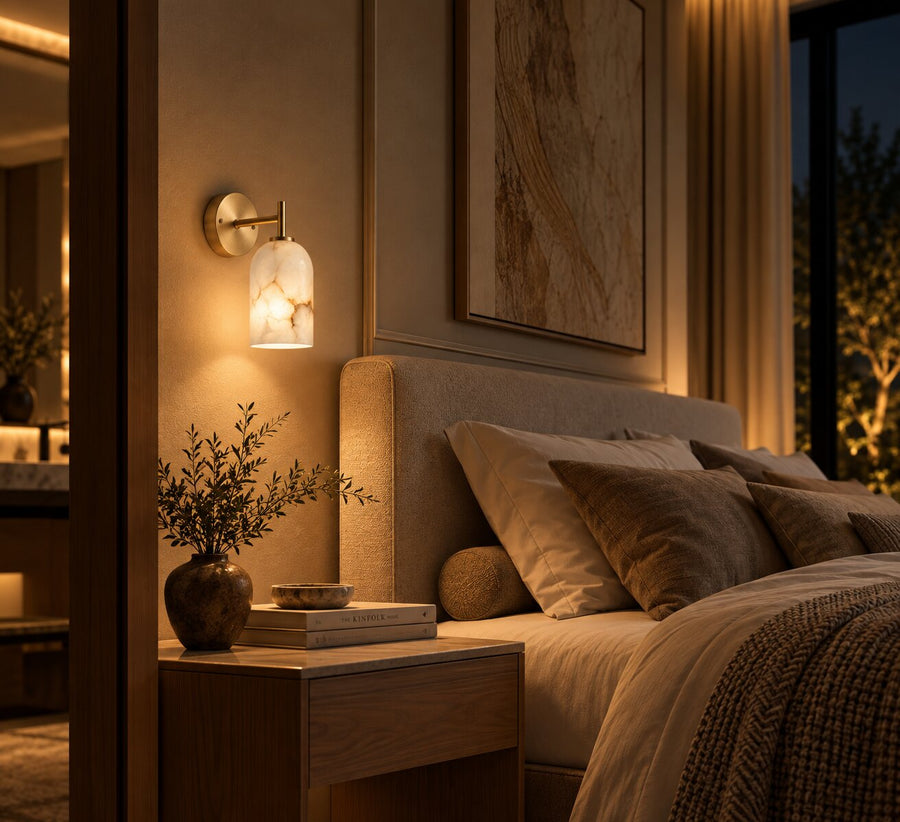 Can You Use Alabaster Lighting in a Bathroom?Alabaster belongs at the vanity and dressing area, not above the bath or in the shower. Zones explained, mirror heigh...Read the guide
Tell the studio the room, the ceiling height and the finish you have in mind, and ask which alabaster pieces would suit.