Your cart
(0)
Made to order · dispatched by 19 November

By commission
TeeshaaAll Lighting
ambient, accent and task light, planned around a glowing alabaster piece, room by room.
To layer lighting around an alabaster fixture, treat the alabaster piece as the ambient or accent layer, then add task light where you work and low accent light for depth, each on its own switch or dimmer. Teeshaa alabaster lighting gives a soft, diffused glow, so the other layers should stay discreet.
Lighting is commonly sorted by purpose into task, accent and general light. Designers call the combination layering.
Task light is functional and concentrated, for reading, chopping or sewing. Accent light is decorative and picks out a picture, a plant or a texture. General light, also called ambient light, gives overall illumination to an area, such as a ceiling fixture or a floor lamp. A room that relies on one layer feels flat. A room that uses all three lets you move between bright and calm without changing the fixture.
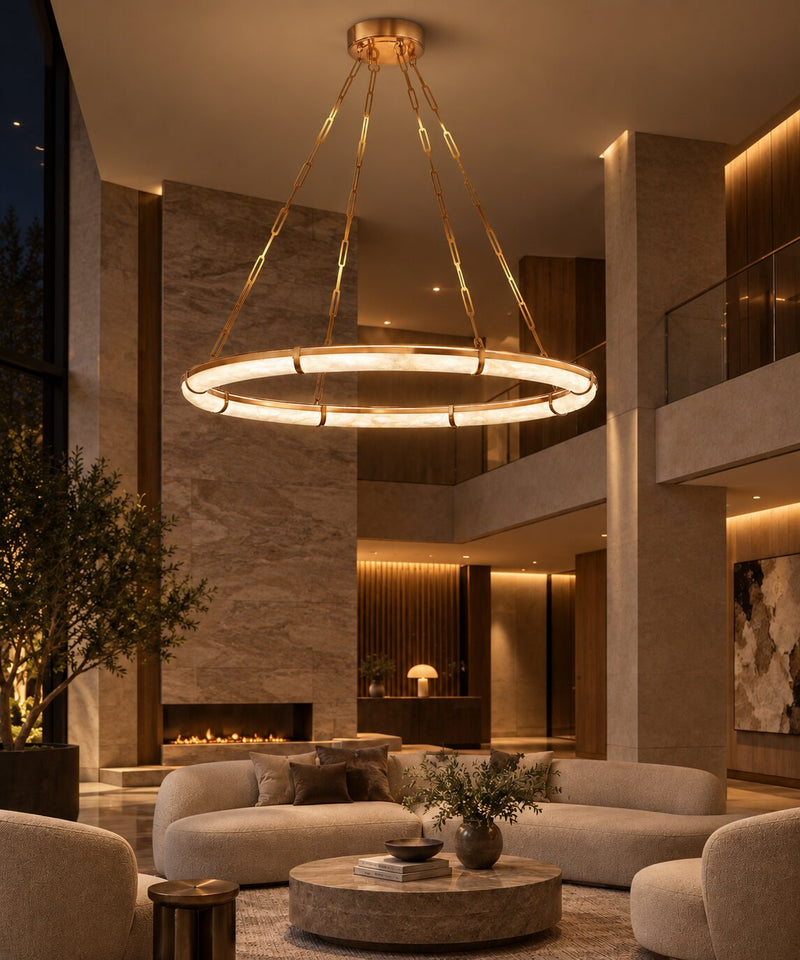
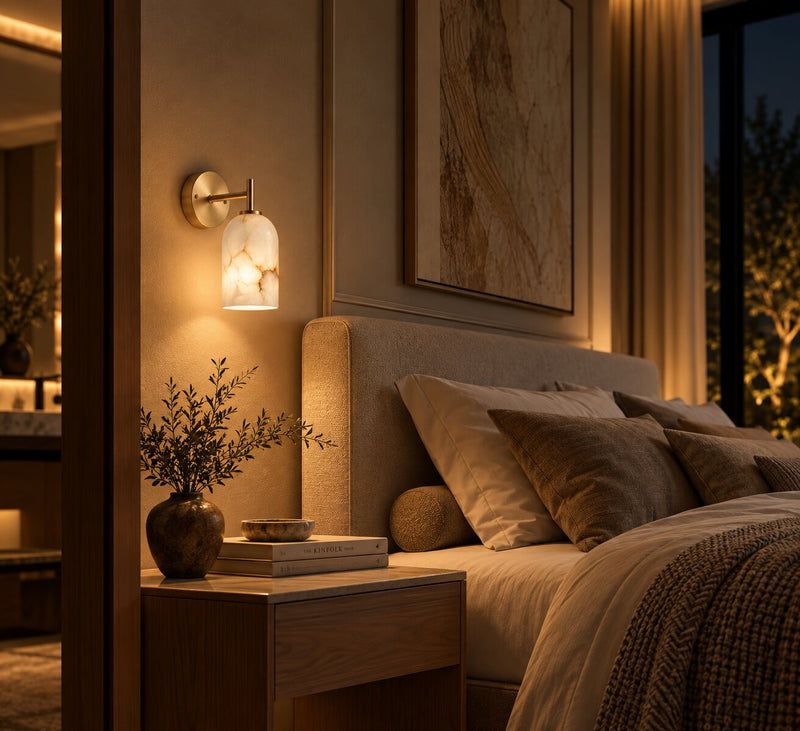
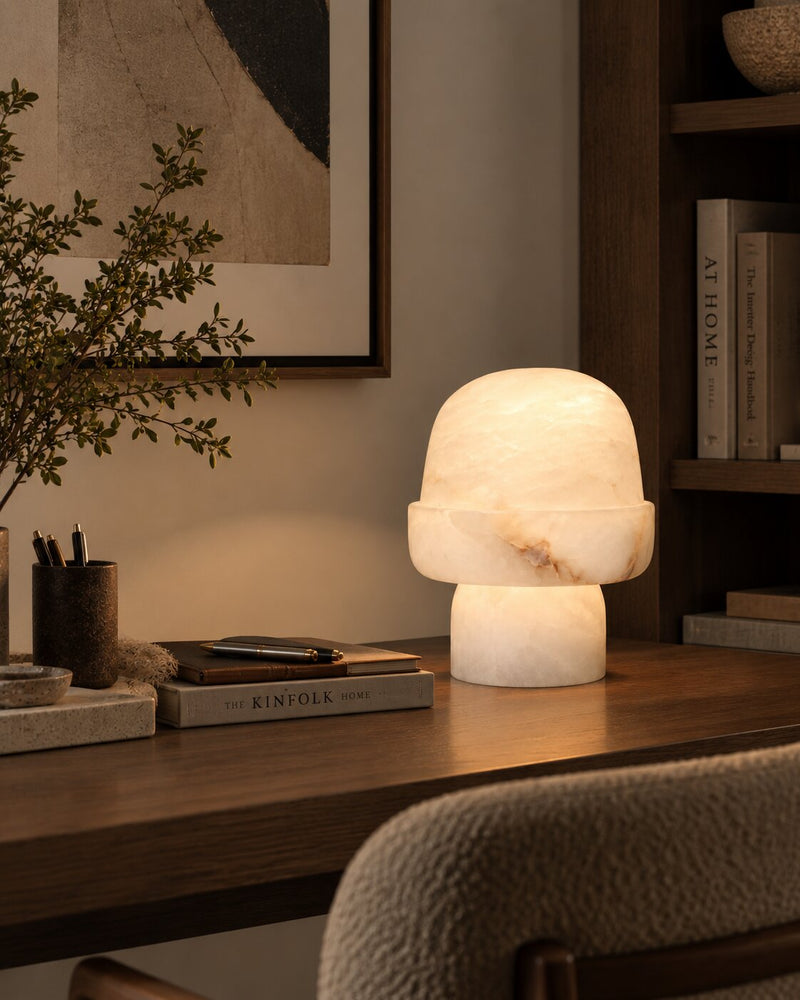
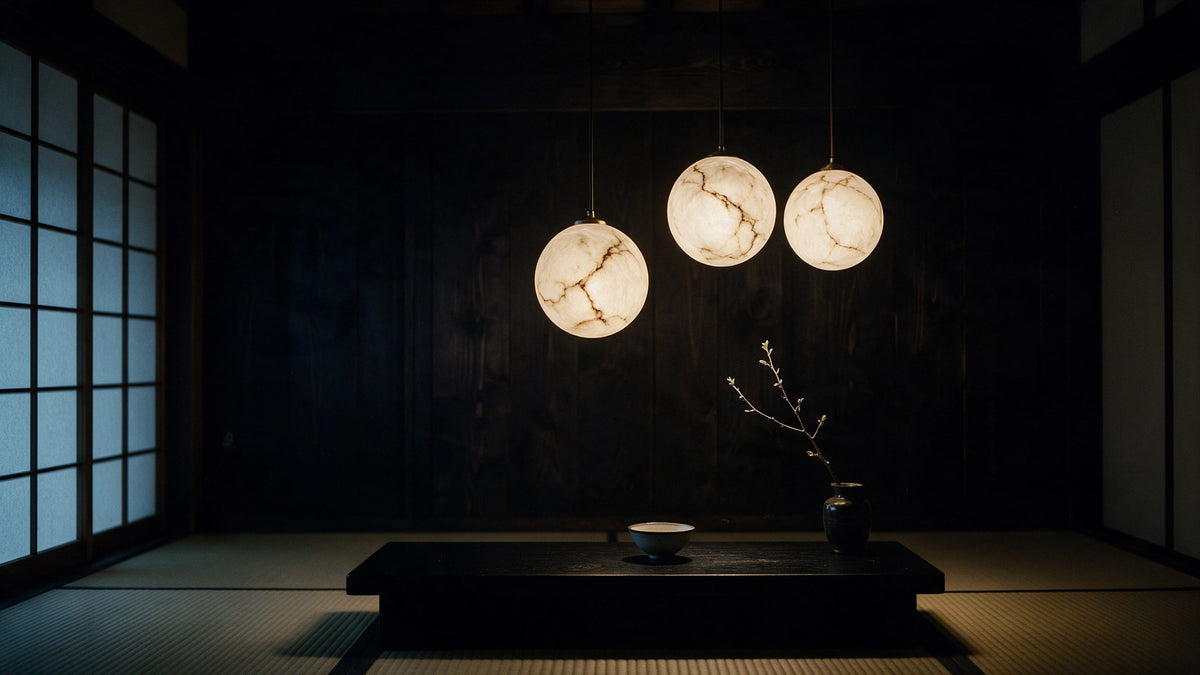
A large alabaster chandelier or pendant usually works as the ambient layer. A small table lamp or wall light usually works as accent.
Both roles suit the stone. Alabaster is naturally translucent, and its clouding and veining differ from block to block, so each piece is also an object to look at. That is why it reads as sculpture when lit and when unlit. What it does not do well is task work. Treat it as the centre of the room's mood and let quieter sources do the practical jobs. For how much light to expect, see how bright alabaster lighting is.
Plan from the activities, not from the fixtures. Work through these steps in order:
Each room needs a different balance. Use the table as a starting point, then adjust for your own habits.
| room | ambient layer | accent layer | task layer |
|---|---|---|---|
| living room | chandelier or pendant over the seating, on a dimmer | table lamps on side tables, a wall light by art | a reading lamp by the main chair |
| dining room | pendant or linear piece over the table, 75 to 90 cm above it | wall lights on a sideboard wall | usually none; serve and clear in the same warm light |
| bedroom | a pendant or soft ceiling glow, dimmed at night | wall lights or table lamps at the bedside, centred 100 to 120 cm from the floor | a separate reading light on each side of the bed |
| corridor | a row of wall lights centred 150 to 170 cm from the floor | a lit niche or console lamp | clear light at steps and thresholds |
Most living rooms and bedrooms work well with two or three zones. Put the alabaster piece on its own circuit, the downlights on another, and the lamps and wall lights on a third.
That gives you a bright setting for cleaning, a mid setting for guests and a low setting for the evening. Plan the zones with your electrician before walls and ceilings are closed, because the wiring is hard to change later. Dimming is available on request on Teeshaa pieces, and you should confirm the dimmer type with the studio before wiring. The details are in dimming and drivers for alabaster lighting.
Keep bright sources out of the direct line of sight from where people sit or lie, and keep the alabaster dimmed in a dark room.
Alabaster itself is a low-glare surface, but a lit stone against dark walls can feel strong late at night. Dim it. Place downlights over the task, not over faces, and choose shielded fittings. Mixed whites make a room look patchy, so use the same warm colour temperature across layers. Most Teeshaa pieces use 2700K, and several offer 2000K, 2300K or 3000K.
Teeshaa makes sculptural alabaster lighting, designed in Bangalore and made in its own facilities in India. For a living-room ambient layer, see the Halo Crown Chandelier and the living room chandelier page. For accent, look at the Essenzo Dome Wall Sconce, the Aura Wall Mount or the Essenzo Porcini Table Lamp. Over a table, the Alabaster Linea Pendant is one option, and the guide to hanging height over a dining table covers the drop. The hub, alabaster lighting, shows the full range, and the wall sconce placement guide covers heights.
The three layers are ambient, accent and task. Ambient, also called general, light gives overall illumination. Accent light highlights objects such as art or a sculptural piece. Task light is focused and functional, for reading or cooking. Most rooms work well when all three are present and can be controlled separately.
A large alabaster chandelier or pendant usually acts as ambient lighting, since it glows softly across the room. A small alabaster wall light or table lamp usually acts as accent lighting. In both roles the piece is also a visible sculptural object, whether lit or unlit.
Yes, wherever you read, cook or work. Alabaster is not a task light, because its glow is diffused and soft. Pair it with discreet downlights or a lamp at the work surface, and keep those on a separate switch or dimmer from the alabaster piece.
Two or three zones suit most living rooms: the alabaster piece, any downlights, and the lamps or wall lights. Plan them with your electrician before the ceiling and walls are closed. Confirm the dimmer type with the Teeshaa studio first, because dimming is available on request.
Keep them close. Mixed whites make a room look patchy. Most Teeshaa pieces use integrated LED at 2700K, and several offer 2000K, 2300K or 3000K. Choose downlights and lamps in a similar warm range, and check the result in the evening.
Reviewed by the Teeshaa studio, 19 October 2026.
 A Lighting Plan for a Villa, Room by RoomVilla lighting room by room: double-height volumes, stairwells, dining, bedrooms, corridors and verandas, with height...Read the guide
 Wall Sconce Height and Placement: Bedside, Corridor, MirrorMounting heights for wall sconces by location, with a table, corridor spacing, when to use pairs, how to switch and d...Read the guide
 Bedside Lighting: Wall Lights or Table Lamps?Wall lights, table lamps or a pendant at the bedside: how to choose, with mounting heights, colour temperature, switc...Read the guide
Share the room size, ceiling height and how you use the space, and the studio will suggest where an alabaster piece fits.