Your cart
(0)
Made to order · dispatched by 18 November

By commission
TeeshaaAll Lighting
a room-by-room lighting plan for a new flat, and what to decide before the false ceiling and wiring.
To plan lighting for a new apartment in India, measure the finished ceiling, then plan three layers in every room: ambient, accent and task. Decide the focal pieces, switching zones and dimming before the false ceiling and electrical first fix, and keep one colour temperature throughout, usually 2700K. Alabaster lighting suits the ambient and accent layers.
Work from the room outwards: measure, decide how the room is used, add layers, then fix the controls. A fixed order stops you buying a beautiful light that does not suit the ceiling.
Before. The decisions that need the ceiling open are cable positions, junction points, fixing points and the access for any remote driver. A manufacturer lighting guide advises starting the planning during rough-in for wire runs and junction boxes, and coordinating placement, load and controls with the electrician early.
The exact stage names vary by contractor, so ask yours when the first fix happens. A heavy piece needs a fixing that reaches the structural slab, not the false-ceiling board. Confirm the support with a licensed electrician or structural adviser, and see installing an alabaster chandelier on a false ceiling.
Allow for lead time too. Made-to-order pieces typically take 3 to 4 weeks, and a ready-to-order piece still depends on delivery timelines. Teeshaa reviews scale, drop, sightlines, output, suspension and access before an order, so share your plan early.
Every room needs ambient light, but only some need strong task light. The table is a starting plan for a typical flat, not a rule.
| Room | Ambient | Accent | Task |
|---|---|---|---|
| Living room | One chandelier or pendant group, or cove light | Wall lights, table lamps, art light | Reading lamp beside the main seat |
| Dining area | Chandelier or pendants over the table | A sideboard lamp | Usually not needed beyond the pendant |
| Kitchen | Downlights or ceiling panel | Pendants over an island | Under-cabinet light at the counter |
| Bedroom | Soft ceiling light on a dimmer | Wall lights or bedside lamps | A reading light for each side |
| Foyer and corridor | A central or paired fixture | A sconce or console lamp | Little needed |
| Study or work corner | Soft general light | A table lamp | A focused desk light |
For deeper layering advice, read how to layer lighting around an alabaster fixture.
Put each layer on its own control. A dining room with a chandelier and downlights is easier to use when the two switch separately, so you can run the chandelier alone in the evening.
Dimming is available on request on Teeshaa pieces, and the driver can sit in the canopy or remotely. Confirm the dimmer type with the studio before the wiring is finished, because a mismatch between driver and dimmer is a common cause of flicker. The details are in dimming and drivers for alabaster lighting.
Pick 2700K as the base for living, dining and bedrooms. Most Teeshaa pieces use integrated LED at 2700K, and several offer 2000K, 2300K or 3000K.
Use 2000K or 2300K where you want a deeper glow, such as a bedroom, and 3000K where you want a cleaner white, such as a kitchen or study. Avoid hanging very different tints in the same sight line, because the rooms look patchy. Staying at 3000K or below keeps alabaster looking warm.
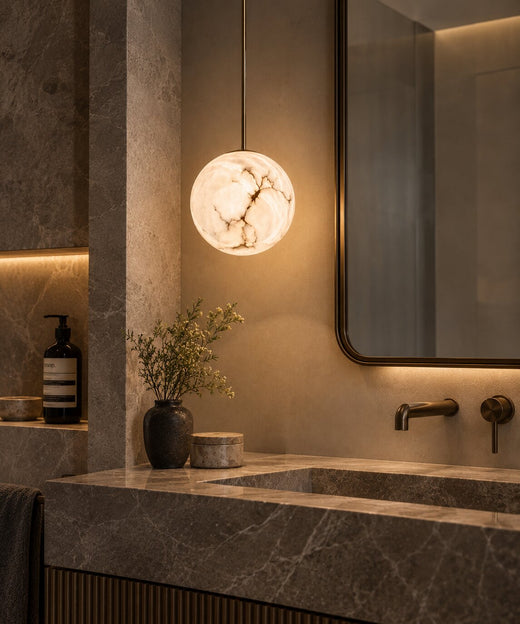
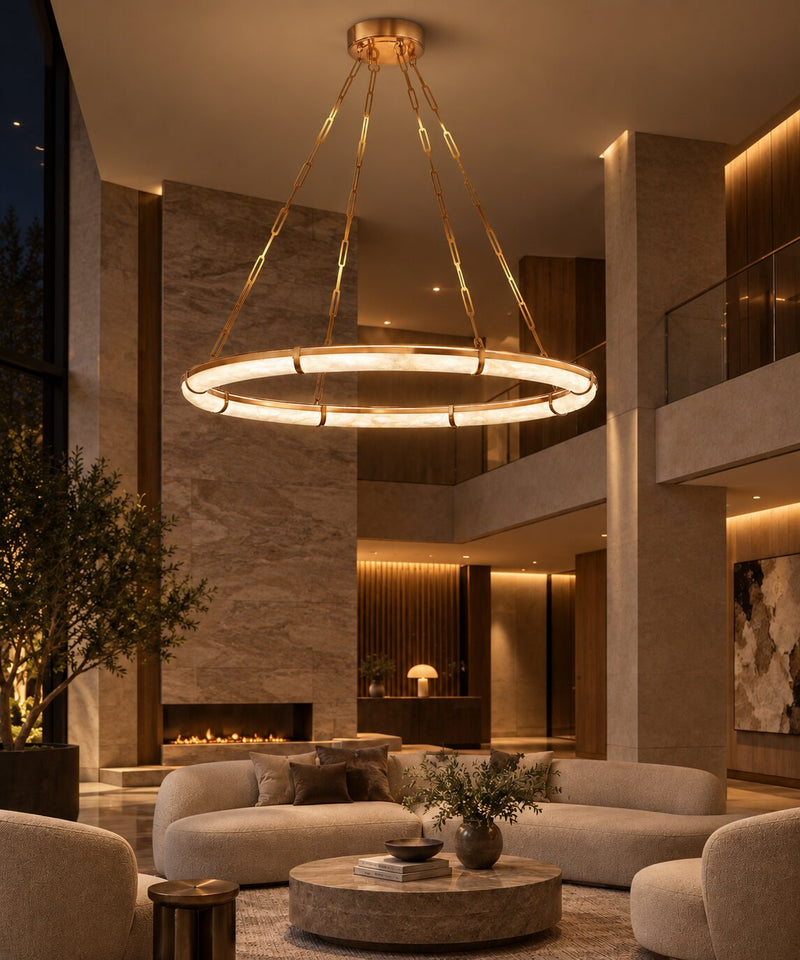
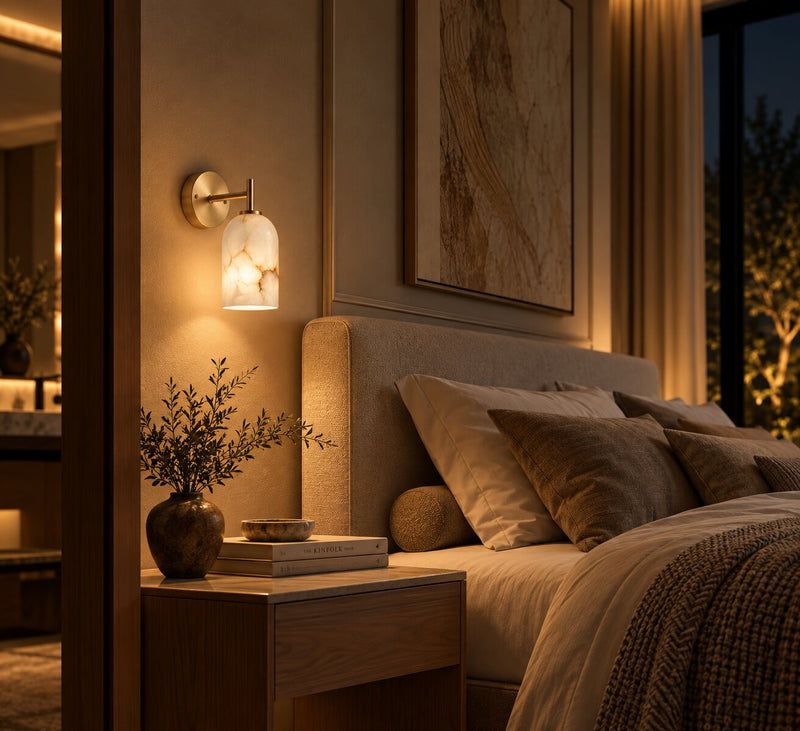
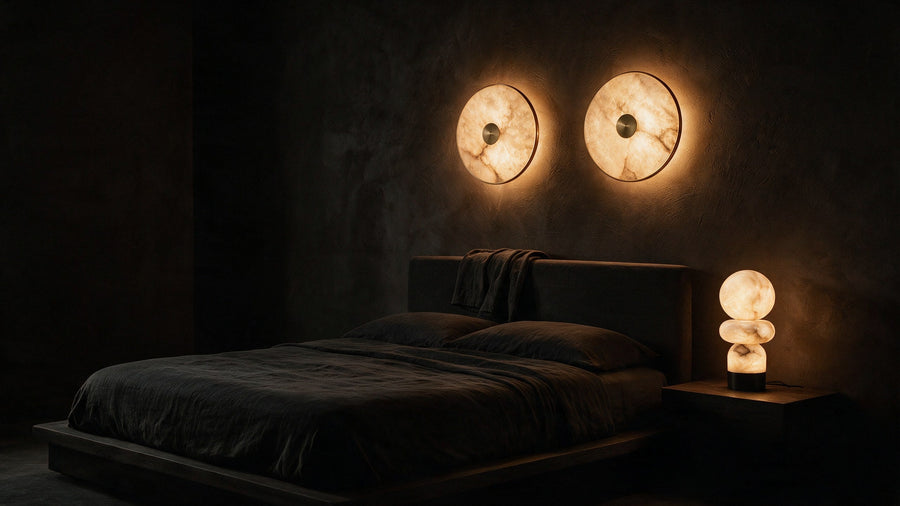
Alabaster supplies the ambient and accent layers. A ring such as the Halo Crown Chandelier (the 60 cm Small is ready to order) suits a dining or seating zone. The Essenzo Pendant and Alabaster Linea Pendant work over tables and islands. The Aura Wall Mount and Totem Table Lamp add accent light without ceiling work.
See the living room chandelier, dining room lighting and bedroom lighting pages, the guide to lighting a Mumbai apartment, or the alabaster lighting hub. Designers can use the trade programme.
Plan it while the flat is still bare, before the false ceiling and electrical first fix. That is when cable positions, junction points, fixing points and driver access can still be set. Ask your contractor when the first fix happens, and brief the electrician with your layout.
There is no fixed number. Plan by layers: one ambient source such as a chandelier or pendant group, accent light from wall lights or table lamps, and a task light beside the main seat. Put the layers on separate controls so the room can change mood.
Mostly yes. A consistent base of 2700K keeps the home calm, with 2000K or 2300K for bedrooms and 3000K for kitchens and study areas. Avoid very different tints in the same sight line. Most Teeshaa pieces use 2700K, with other options on some pieces.
Not always, but a designer or lighting consultant helps in larger flats. Whoever plans it, coordinate positions, loads and controls with a licensed electrician early. Designers can apply to the Teeshaa trade programme and request dimensions, finishes, lead times and electrical information against an active project.
Rarely. Alabaster is a diffused, atmospheric source, not a task light. It carries the ambient and accent layers well, but add discreet downlights or a focused lamp where you read, cook or work. The result is a room that is usable as well as beautiful.
Reviewed by the Teeshaa studio, 19 October 2026.
 Lighting a Mumbai Apartment: Low Ceilings, Sea Air and Warm Stone LightLow ceilings, compact dining, wall lights that free the floor and monsoon care for stone: how to light a Mumbai apart...Read the guide
 A Lighting Plan for a Villa, Room by RoomVilla lighting room by room: double-height volumes, stairwells, dining, bedrooms, corridors and verandas, with height...Read the guide
 Entrance Lighting Ideas: The First Thirty SecondsSize the piece to the foyer, keep 2.1 m clear underneath, centre it on the view from the door and add low warm light ...Read the guide
Share your floor plan, finished ceiling heights and finish preferences, and the studio will help you place the alabaster pieces.